Overview
The Economic Development in Rural Alberta Plan sets out a 5-year commitment that guides rural economic growth, reflecting on innovation, diversification, and sustainable, long-term economic development. The plan outlines 5 strategic directions, each of which connects to supporting initiatives already underway as well as new actions we are taking to ensure rural Albertans have economic opportunities where they live.
Rural Albertans and Indigenous community members helped inform the plan by sharing their perspectives on the successes, challenges and opportunities of rural economic development.
Together, we are working toward the vision that Alberta’s rural community is resilient, innovative and prosperous, providing sustainable economic opportunities for individuals, families, businesses and visitors.
Economic Development in Rural Alberta Plan
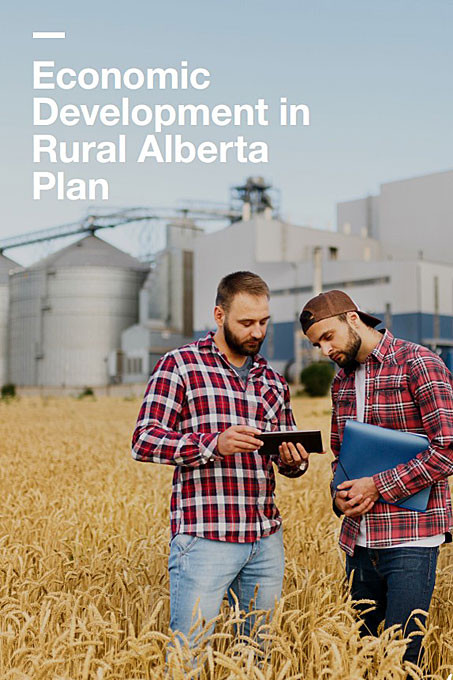
The plan's 5 strategic directions and corresponding initiatives and actions will support capacity building in the key areas of entrepreneurship, skills development, small business supports, marketing rural and Indigenous communities, promoting tourism, and rural economic development interconnectivity at the regional level.
Review the highlights of the 5 strategic directions below or read the full plan.
Strategic direction 1: Economic development-enabling infrastructure
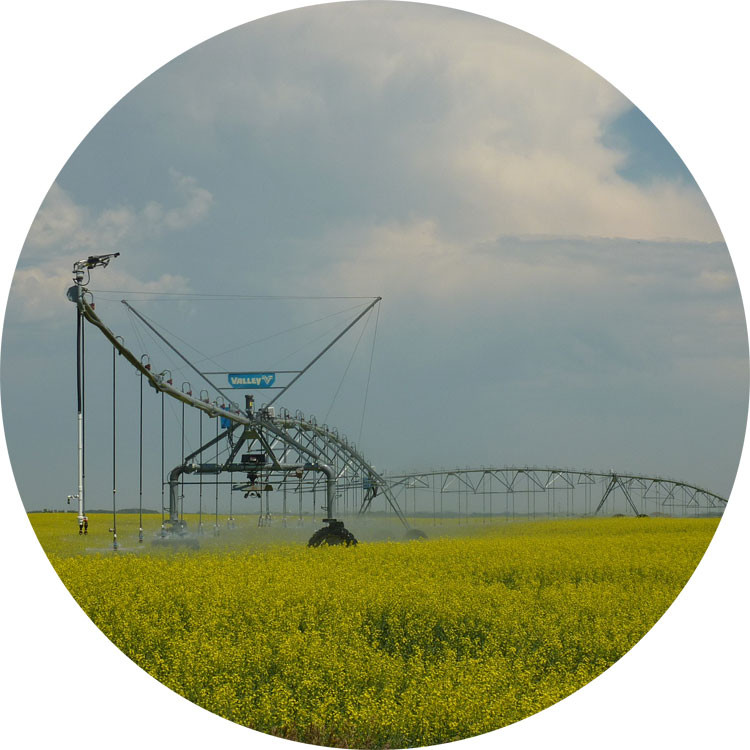
Identify and improve power, water, telecommunications and transportation networks to support investment and growth in rural Alberta.
-
2025-26 actions we are taking
- Powering up communities with Ag. Society dollars – Alberta’s government is helping the Alberta regional agricultural societies plan for tomorrow with new and continued funding. Alberta’s government is helping regional agricultural societies weather increasing costs and plan ahead with a one-time cash injection of more than $7.4 million.
- Building on excellence in 2025 – Hundreds of infrastructure projects completed or underway throughout 2024 helped build Alberta communities, boost the economy and support thousands of jobs.
- Building stronger communities across rural Alberta – Alberta’s government is providing $114.6 million to municipalities to support 86 local road, bridge and water infrastructure projects.
- Clean water, less waste and more savings – Provincial funding will help 2 small towns test new ways to treat wastewater and convert waste into energy. Alberta’s government is investing $10 million from the industry-funded Technology Innovation and Emissions Reduction program to pilot 2 new technologies that will help Cardston and Peace River treat wastewater more efficiently and turn waste into clean energy.
- Doubling down on Alberta’s regional economies – Alberta’s government is tripling funding and doubling community impact, creating jobs and sparking innovation through targeted grants. In 2024-25, Alberta’s government invested a ground-breaking $9.8 million in 81 projects through the Northern and Regional Economic Development program, creating new opportunities and strengthening Alberta’s local economies.
-
2024-25 progress on supporting initiatives
- Agricultural Societies Infrastructure Revitalization Program – Agricultural societies can apply for funding for major repairs to existing infrastructure. In 2024-25, the program awarded $2.5 million in grants to agricultural societies around the province.
- Saving Alberta farmers time and money – Changes to Agriculture Financial Services Corporation’s AgriStability program will reduce paperwork and lower costs for producers. AgriStability is an individual, whole-farm, margin-based program that helps producers who experience margin declines greater than 30% due to production loss, adverse market conditions and increased costs.
- Building Alberta’s regional airport network – Alberta’s government is investing $1.13 million to support the development of regional airports across the province.
- Bolstering Alberta’s irrigation infrastructure – Alberta’s government is investing $19 million to update infrastructure and improve the agriculture industry’s productivity and competitiveness.
- Upgrading rural infrastructure – Alberta’s government is providing grants to rural and remote municipalities to support a new road, bridge, community airport, and water infrastructure projects. More than $236 million in grants will support 125 local transportation and water infrastructure projects in small and rural communities across Alberta, which will create hundreds of jobs and support growing communities.
- Local Government Fiscal Framework – a Government of Alberta funding mechanism that provides local government with capital infrastructure and operating grant support.
- Building Forward: Alberta’s 20-Year Strategic Plan – The 20-Year Strategic Capital Plan examines how innovation, technology, and anticipated trends are changing the way we use, plan design and deliver infrastructure. The key objectives of the strategic plan are strong fiscal management, maintaining a healthy economy, encouraging job growth, and focusing on innovation.
- Expanding economic corridors across the prairies: Alberta, Saskatchewan and Manitoba are collaborating on economic corridor projects to improve infrastructure, enhance network efficiency, and reduce regulatory hurdles.
- High-speed internet coming to Strathcona County – More homes throughout Alberta will have access to high-speed internet, thanks to a joint provincial-federal investment of more than $380,000.
- Protecting communities from drought and floods through the Drought and Flood Protection Program, investing more than $30 million into community-led projects that will protect public safety.
- New funding will help municipalities access technology to lower electricity bills and reduce emissions through a new $3 million Municipal Electricity Generation Program.
- Alberta’s government is investing almost $15.5 million to improve access to health care for rural Albertans through the Rural Health Facilities Revitalization Program which is supporting 44 projects in 39 communities.
- Supporting Alberta’s growing communities – Applications are open for the Local Growth and Sustainability Grant to help relieve pressure on public infrastructure in Alberta’s fastest growing municipalities. To help municipalities experiencing population growth-related pressures on public infrastructure, Alberta’s government has introduced the Local Growth and Sustainability Grant (LGSG), providing $60 million over 3 years to help meet this challenge.
- Alberta’s government invested $5 million to restore more wetlands in Alberta through the Wetland Replacement Program, which supports three municipalities, and two non-profits construct and restore seven projects affecting more than 165 hectares of wetland throughout the province. This helps strengthen Alberta’s natural drought and flood projections, improves water quality and creates healthier ecosystems.
- Driving rural energy innovation and investment to support the ongoing success and innovation of Alberta’s energy industry through the Alberta Petrochemicals Incentive Program (APIP). The Rocky Mountain Clean Fuels project is qualified to receive an APIP grant of near $21 million. The project has created more than 900 new jobs during the construction and operations, which began on November 27, 2024.
- Barrhead Composite High School Modernization – Upon completion of the project the school will be able to accommodate up to 820 students in Grade 7 to 12. The estimated cost of $68. 3 million.
- Schools Now – Building schools closer to home. To meet this need, Alberta’s government has committed to building 90 new schools and updating classrooms in communities across the province. Through the Schools Now program, Alberta’s government will invest $8.6 billion to create more than 200,000 new and updated student spaces over 7 years.
- Protecting homes and businesses from drought and floods – Alberta is investing more than $19 million through Budget 2025, if passed, to help protect families and businesses from future floods and drought.
-
2023-24 progress on supporting initiatives
- Highway 3 twinning moves ahead – Alberta’s government has awarded the first contract to begin twinning Highway 3, improving safety, creating jobs and spurring economic investment in the region.
- Alberta Broadband Strategy continued to guide improvements to provincewide connectivity and bring high-speed internet access to homes in 74 rural, remote and Indigenous communities across Alberta through the Alberta Broadband.
- Alberta Municipal Water/Wastewater Partnership and the Water for Life program provided $142 million in cost-shared funding for 72 municipalities to build or upgrade regional water supply and treatment facilities, and wastewater treatment and disposal facilities.
- Building Forward: Alberta’s 20-Year Strategic Capital Plan guided rural communities in planning 20 projects such as schools, roads and transportation corridors that are expected to create 740 jobs.
- Built up agricultural societies through the Agricultural Societies Infrastructure Revitalization Program by providing $2.5 million for major repairs and upgrades to existing facilities like community halls, arenas and rodeo grounds.
- Irrigation expansion and modernization partnership with the Canada Infrastructure Bank and 9 irrigation districts continued with Alberta’s $24.8 million investment to help expand primary agriculture production and grow the agri-food and value-added processing industries.
- Municipal Sustainability Initiative allocated $186.3 million to municipalities and Metis Settlements for local infrastructure priorities that build safe, strong and resilient communities.
- Extending highway 686 to connect northeastern and northwestern Alberta through an agreement that was established with Loon River First Nation, Peerless Trout First Nation, and Bigstone Cree Nation.
- Strategic Transportation Infrastructure Program provided rural and smaller urban municipalities $37.5 million for 69 projects to develop and maintain local bridges, airports, roads and for other priority initiatives.
-
2022-23 progress on supporting initiatives
- Alberta Broadband Strategy was established to make reliable, affordable, high-speed internet a reality in rural, remote and Indigenous communities through a $390 million investment over the next 4 years.
- Alberta’s Provincial Construction Program outlined major highway, bridge and water management projects scheduled over the next 3 years.
- Building Forward: Alberta’s 20-Year Strategic Capital Plan took a provincewide view to help government navigate through challenges and opportunities over the next 2 decades and ensure the right infrastructure is in place to support Alberta’s future.
- First Nations Regional Drinking Water Tie-in Program committed $100 million over 6 years to provide 14 Indigenous communities with reliable access to clean drinking water.
- Irrigation expansion and modernization partnership with the Canada Infrastructure Bank and 9 irrigation districts was formed to invest $933 million between 2021 and 2028 to help expand primary agriculture production and grow the agri-food and value-added processing industries.
- Strategic Transportation Infrastructure Program committed $103.4 million over 3 years, with $31.5 million allocated in 2022-23 for rural and smaller urban municipalities to develop and maintain local bridges, airports, roads and for other priority initiatives.
- Strengthening an economic corridor in Oyen through a signed agreement and $1 million funding partnership to explore whether the rail line between Oyen and Lyalta should be restored.

Strategic direction 2: Rural business supports and entrepreneurship
Increase access to supports for entrepreneurship and small business capacity to help grow a culture of innovation and entrepreneurship across rural Alberta.
-
2025-26 actions we are taking
Growing production at Alberta’s biggest greenhouse – $2.2 million delivered through Emissions Reduction Alberta will help install new technology to save millions of dollars on energy bills and produce more food for Albertans.
Alberta Advantage Immigration Program updates – Find out about recent changes to the Alberta Advantage Immigration program.
Alberta uncorks new rules for liquor and cannabis – Alberta’s government is supporting liquor producers by enabling them to own, operate and sell their own products on large format bikes or “party bikes.”Possibilities in the pipe for Nordegg – Alberta’s government is reducing utility costs and boosting rural economic development by expanding natural gas service to the Nordegg area. Alberta’s government is providing $2.5 million through the Rural Gas Program to build a natural gas pipeline.
Powering life in rural Alberta – Budget 2025 is helping rural Albertans access essential services like gas, electricity and water to grow their local economies. Budget 2025 provides $8.5 million for the Rural Utilities Program – which consists of the Rural Electric Program, Rural Gas Program and Rural Water Program – and the Remote Area Heating Allowance.
Sustaining Alberta’s rangelands – Alberta’s government is investing $1.3 million to strengthen the health biodiversity and long-term resilience of the province’s rangelands. The Rangeland Sustainability Program supports academics, non-profits and other agricultural partners in turning their innovative ideas into reality.
Turning forestry waste into industrial fuel – Alberta’s government is investing $3 million form the TIER into a new hydrogen project that will help industry create jobs, attract investment and reduce emissions.
-
2024-25 progress on supporting initiatives
- Agriculture – Funding programs, business resources, agriculture information, agri-food and local food business resources, and calculators and tools on one Alberta website.
- Cultivating economic growth in rural Alberta – Alberta’s value-added agriculture sector is growing with a hemp processing plant led by a partnership between Logistik Unicorp Inc. and Frog Lake First Nations in Eld Point. Budget 2024 dedicated $15 million for the Investment and Growth Fund to secure private-sector investments, of which $5 million is dedicated to rural Alberta.
- On-Farm Value-Added Program – Helps primary producers grow sales, expand production capacity, explore market opportunities and create jobs in Alberta. The grant program has 2 funding streams: Stream A provides a maximum grant up to $50,000 and Stream B, provides a grant over $50,000 to maximum of $250,000 to eligible applicants.
- AGI launches survey for all Alberta producers to share input on the cost of production, impediments to establish, maintain or grow an agricultural operation, government policy or programming that would support a thriving agriculture sector.
- Alberta Advantage Immigration Program is an economic immigration program that nominates people for permanent residence in Alberta.
- Alberta Settlement and Integration Program – Eligible organizations can apply for funding to create services and initiatives that help newcomers settle and integrate in Alberta.
- Innovation Employment Grant – Companies can receive a grant of up to 20% toward qualifying research and development expenditure. The program promotes investment and diversification by rewarding all R&D spending in Alberta, regardless of the industry, and complementing the job creation tax cut by focusing on small and medium-sized firms in the earlier stages of operation, when they might not yet be profitable.
- Implementing red tape reduction – Alberta is cutting red tape to speed up regulatory processes and attract investment. Alberta’s government is continuing to cut red tape to promote economic growth and help businesses, taxpayers and families save time and money that they can use to invest, create jobs and grow their business.
- Historic energy deal boosts economic reconciliation – made possible through a historic investment agreement between TC Energy and many Indigenous communities across western Canada, which was make possible because of an unprecedented $1-billion loan guarantee by the Alberta Indigenous Opportunities Corporation.
- Grant program steers Alberta’s outdoor fun – A $1 million boost to Alberta’s Public Lands Trails Program will increase opportunities for community organizations to enhance activities on non-motorized trails.
- Celebrating rural success – Rural communities have long played a crucial role in Alberta’s growth and economy. To support them, we continue to implement our Economic Development in Rual Alberta Plan, a 5-year commitment to foster rural economic growth in Alberta with a focus on rural business supports and entrepreneurship.
- Cutting red tape in tax credit program – Changes to the Agri-Processing Investment Tax Credit program allow registered partnerships to apply with a single application and investment. Alberta’s government has updated the Agri-Processing Investment Tax Credit program to cut red tape and simplify how registered partnership apply.
- Bringing coal policy into the 21st century – The Alberta Coal Industry Modernization Initiative, which brings greater focus on what Albertans want to see in the coal industry – environmentally responsible policies that hold industry to the highest standards and encourages investment and job creation.
- Workforce Partnerships Grants – Provides funding to organizations such as employers, industry and sector associations, regional organizations and Indigenous organizations to support labour market adjustment strategies and workforce development, including initiatives to attract and retain workers through partnerships.
-
2023-24 progress on supporting initiatives
- Alberta’s greenhouse gas emissions reduction performance – Alberta’s emissions-reduction leadership and progress. Overall emissions in the province are declining. As of 2023, Alberta’s total emissions have declined by 25.1 million tonnes – an 8.7% reduction since 2015.
- Canada-Alberta Job Grant invested $2.2 million for employers to provide training opportunities for 1,000 employees and unemployed Albertans.
- Forest Jobs Action Plan continued to provide local forestry operators with access to a sustainable and secure fibre supply through 46 short-term timber permits and 22 permits for timber damaged by 2023 wildfires.
- Sustainable Canadian Agriculture Partnership distributed over $56 million to producers, value-added processors, grazing organizations and industry organizations to strengthen competitiveness, innovation and resiliency in the agriculture sector.
-
2022-23 progress on supporting initiatives
- New mentorship opportunities for newcomer success – Alberta’s government is funding projects that newcomers access mentorship opportunities to build their careers and further diversify the economy. A $2.1-million investment under the Alberta Immigrant Mentorship Innovation Grant will help 8 organizations deliver career mentorship programs that help newcomers find meaningful employment based on their work experience, education and skills.
- Alberta Advantage Immigration Program attracted and supported almost 900 skilled newcomers to help diversify the economy and create jobs through the Rural Renewal and Rural Entrepreneur Streams.
- Alberta Value-Added Wood Products Program received $2.25 million over 5 years to help small- and medium-sized value-added wood manufacturers attract investment, expand into new markets, enhance manufacturing capabilities and create jobs.
- Energy Savings for Business Program allocated $55 million to Alberta businesses for energy savings technologies to improve efficiency and reduce emissions.
- Forest tenure systems allocated 137,500 cubic metres (m3) of previously unallocated timber, including 86,000 m3 to Indigenous owned and operated companies.
- Innovation Employment Grant incentivized more than 1,300 businesses across the province to conduct research and development and qualify for non-refundable tax credits assessed at $84 million.
- Investment and Growth Fund Rural Stream invested $1.66 million to attract 3 manufacturing facility projects that created more than 350 permanent jobs and more than 100 temporary jobs.
- Made in Alberta Voluntary Labelling Program launched to help consumers identify food and beverages produced here and buy local to help boost the economy.
- Red Tape Reduction Implementation Act, 2020 amended 14 laws to save Albertans and Alberta businesses about $1.4 million, including Bee Act amendments that allow quicker responses to disease outbreaks and Irrigation District Act amendments that expedite water licence transfers.
- Results Driven Agriculture Research (RDAR) received $27.1 million to support 93 research projects on urgent and emergent topics like drought, bee health, crop disease and disease threats.

Strategic direction 3: Support for labour force and skills development
Enable skills development to enhance rural workforce capacity to support community services such as health, education and business.
-
2025-26 progress on supporting initiatives
- Alberta Jobs Strategy – Helps young Albertans and career-changing adults access the information, skills and support they need. On the list of primary actions are, deliver the Northern Alberta Development Bursary Program to encourage students to train for jobs that are in demand in northern Alberta and the Alberta Advantage Immigration Program to support provincial economic and labour needs.
- Building a future-ready workforce – The new Labour Market Information portal offers the tools and insights needed to help Albertans prepare for the jobs of today and tomorrow.
- Kick-starting careers for young Albertans – A new youth hiring incentive is launching to help young Albertans get experience, build confidence and gain skills to launch rewarding careers. Alberta’s government is providing $8 million for the new Alberta Youth Employment Incentive, which will provide grants to employers to offset costs associated with hiring, training and employing youth from age 15 to 24.
- Building Alberta’s future, one job at a time – Alberta’s government has introduced its job strategy to help more people find meaningful employment through training, education and experience.
- Expanding skilled trades training in northern Alberta – Alberta’s government is supporting skilled trades expansion planning at Northwestern Polytechnic to increase apprenticeship education opportunities in the north. Alberta’s government is investing $1 million through Budget 2025 to support the planning phase of an expansion of skilled trades and apprenticeship education at Northwestern Polytechnic.
- Advancing midwifery access in Alberta – Alberta’s government is advancing a midwifery strategy to attract more midwives and improve access to maternal health services across Alberta. To help achieve this goal, $10 million is being invested over 3 years to implement the comprehensive new Alberta Midwifery Strategy.
- Alberta leads with health care aide regulation – Alberta will become the first province to regulate health care aides under a health professional regulatory college, ensuring patients get high-quality care from qualified professionals.
- Getting Albertans back to work – Alberta’s government is investing $33 million in training programs to help unemployed and underemployed Albertans gain the skills needed to rejoin the workforce.
- Investing in our post-secondary system – To improve access to physicians for Albertans in rural and remote areas, government is investing $43.2 million in capital funding over 4 years and $55.6 million to support operating expenses over the next 3 years. Through Budget 2025, Alberta's government will continue to support this commitment by providing over $18 million, out of the total funding, in the 2025-26 fiscal year.
- More primary care on the way for rural Alberta – Rural Albertans will soon have better access to doctors and care teams as 74 medical residents begin providing care and dozens of clinics expand their staff. The initiatives include a $16-million pilot bursary program that supports 74 family medicine residents expected to begin practising in rural Alberta between now and July 2027.
- Northern Alberta Development Bursary Program – Funding opportunities for living and working in northern Alberta. Bursaries range from $7000.00 up to $14,000.00 per student entering an eligible program.
- Nurse Practitioner Bursary – This bursary aids upcoming nurse practitioners to build a future in northern Alberta. The Nurse Practitioner Bursary is a return service bursary of $10,500 or $21,000 per year for up to 3 years of the program.
-
2024-25 progress on supporting initiatives
- Alberta Agricultural Societies Program continues to encourage improvement in agriculture and in the quality of life of people living in an agricultural community. In Budget 2024, $11.5 million was invested in the Agricultural Societies Grant Program, including $2.8 million to regional societies.
- Alberta Agricultural Society Innovation Award recognizes agricultural societies for their innovation, resilience and commitment to their communities.
- Alberta Agriculture Hall of Fame recognizes exemplary agricultural leadership and accomplishment in the province since 1951. 2024 Hall inductees include: Dr. Kee Jim-Okotoks, Manfred Kanehl-Parkland County, and Blair Roth-Lethbridge.
- Alberta Century Farm and Ranch Award provides provincial recognition of farm families who have continuously owned and actively operated the same land for 100 years or more.
- Alberta 2030: Building Skills for Jobs Strategy is a transformational vision, direction and new way of working for our province’s higher education system.
- Alberta invests in skilled northern workforce – Again! – Alberta’s government is investing an additional $450,000 to help students succeed in northern Alberta. With this year’s funding increase, an additional 50 students will receive support to ease their post-secondary costs, helping students jump-start their careers while reducing their financial burden.
- Enhancing health care services in Beaverlodge – Through budget 2024, Alberta’s government invested $25.2 million to replace the 68-year-old Beaverlodge Health Centre with a state-of-the-art facility.
- Historic signing drives Alberta towards decarbonization – Carbon capture, utilization and storage in Alberta takes a big step forward as the Atlas project signs a carbon sequestration agreement with Alberta’s government.
- Supporting Jasper residents’ return home – Alberta’s government continues to support recovery efforts in Jasper and is helping residents return to the community with $112 million in funding for interim housing.
- Housing starts in Alberta continue to rise – Alberta housing starts rise to 42,954 so far in 2024, a 35% increase over the same period last year. Together with its partners, Alberta’s government is supporting $9 billion in investments into affordable housing to support 25,000 additional low-income households by 2031.
- Partnering to streamline trade credentials – Government of Alberta and the Government of Ontario have signed a Memorandum of Understanding aimed at creating opportunities for newcomers and filling gaps in the skilled labour market.
- Foreign Qualification Recognition – Microloans for newcomer professionals: Windmill Microlending provides low-interest microloans to Alberta newcomers to help with expenses related to occupational licensing and certification, including training, examinations, textbooks and study materials, skills upgrading, and licensing fees.
- Indigenous Employment Training Partnerships Program – Partnership provided grant funding to Indigenous communities and organizations to deliver group-training projects designed in partnership with employers and other partners.
- Indigenous Housing Capital Program – Funding for Indigenous governments and organizations, housing providers, municipalities, and non-profits to build affordable housing.
- New affordable housing for Conklin Metis families – Alberta is celebrating the completion of Phase 1 of the Conklin Indigenous Housing Initiative which provided 15 affordable housing units. Through Alberta’s Indigenous housing Capital Program (IHCP), a total of $4.4 million was contributed to the Conklin Indigenous Housing Initiative.
- Public library grant for skill development in rural Alberta – Select public library boards received funding to boost digital skill training, job readiness programs and newcomer supports. This is a one-time grant program with a total budget of $200,000. Grants have been awarded in amounts of up to $10,600 to a total of 37 recipients.
- Rural health action plan 2024–2027 – The 2024–2027 Rural Health Action Plan will help guide the Government’s actions in the sphere of rural and remote health care. It outlines key rural health priorities and has five areas of focus: workforce, access, models of care, community care, and prevention and wellness.
- Supporting newcomer youth in Brooks – Alberta’s government is investing $150,000 into the Global Village Centre’s John Ware Youth Empowerment Program. The program will provide more newcomer youth in rural communities with social supports and opportunities for career planning.
- Skilled trades training for Indigenous students – Alberta’s government is investing more than $1.5 million over 3 years, beginning in 2024-25, to help Indigenous students meet Alberta’s residential construction demand.
- Training and employment services directory – Programs and services to help individuals find and keep jobs, get training and adapt to a changing labour market.
-
2023-24 progress on supporting initiatives
- Alberta’s Health Workforce Strategy allocated $158 million to increase the number of health professionals, expand physician training and recruit internationally educated physicians and nurses.
-
2022-23 progress on supporting initiatives
- Alberta 2030: Building Skills for Jobs outlined a 10-year strategy for post-secondary education that will transform the adult learning system to focus on providing the high-quality education, skills and training needed for the province’s future.
- Alberta’s Health Workforce Strategy helped attract more than 330 new physicians and more than 7,500 regulated nurses to rural and urban areas.
- Employment Partnerships Program supported 27 Indigenous workforce development projects including training for almost 1,300 community members and job fairs to connect more than 8,700 members with potential employers.
- Public Library Grant for Skill Development in Rural Alberta allocated $200,000 to help rural public libraries strengthen services and programs to support communities in becoming resilient and sustainable.
- Rural communities attracted new doctors through the Rural Education Supplement and Integrated Doctor Experience (RESIDE) Program, which committed $6 million over 3 years to attract 20 new family physicians each year.
- Rural Health Professions Action Plan’s Internationally Educated Nursing Project attracted nurses and medical students to rural communities and promoted careers in rural health care to high school and post-secondary students.
- Stronger Foundations affordable housing strategy invested $125 million from the Affordable Housing Partnership Program to support 30 projects that create more affordable housing, shelters, seniors housing and supportive housing facilities.
- Supported agriculture labour demands through a $2.5 million federal-provincial partnership that enabled Ag for Life to improve awareness of agriculture and agri-food careers, and provide producers and processors with training and supports to recruit, hire and retain workers in the industry.
- Training and employment services provided Albertans in rural areas with on-line and remote access to training supports to help them respond to changing labour market conditions and find jobs.
- Workforce Partnership grants allocated $228,655 to 9 rural regions for Labour Market Partnership projects that support workforce development and enable more newcomers, youth, Indigenous peoples, women, mature workers and people living with a disability to participate in the workforce.

Strategic direction 4: Marketing and promoting rural tourism
Enhance rural Alberta’s reputation and capacity as a diverse tourism destination through the development of new products and experiences, helping to attract and retain talent that supports other industries.
-
2025-26 actions we are taking
- Promoting Alberta as a world-class hunting destination – Minister of Forestry and Parks, Todd Loewen travelled to Nevada to promote Alberta’s annual Minister’s Special Licence for bighorn sheep.
- Another successful year for Alberta Parks – Alberta’s world-class provincial parks and recreation areas attracted millions of visitors from more than 60 countries in 2024. Alberta’s provincial parks contribute an estimated $1 billion annually to provincial GDP, provide $400 million in labour income and support almost 9,000 jobs for Albertans.
-
2024-25 progress on supporting initiatives
- Travel Alberta 2024-25 Annual Report – Taking Alberta’s visitor economy to new heights. Through the Travel Alberta tourism investment program, projects were funded in more than 60 communities across the province in 2024-25.
- Alberta Government is preserving the province’s history by investing $1.7 million in heritage conservation and awareness – Many rural communities benefited from receiving this award for initiatives that preserve and interpret Alberta’s heritage.
- Building opportunities for a healthier tomorrow – Through the Active Communities Initiative, Alberta’s government has committed $4.2 million to increasing access to sport and recreation activities across the province.
- Film and Television Tax Credit continues to offer a refundable Alberta tax credit on eligible production costs to corporations that produce films, television series, and other eligible screen-based productions in the province. Effective June 7, 2024, productions can apply to the Film and Television Tax Credit program up to 120 days after commencing principal photography in Alberta.
- Grant program steers Alberta’s outdoor fun – A $1 million boost to Alberta’s Public Land Trails Grant Program will increase opportunities for community organizations to enhance on non-motorized trails.
- Product Development Fund – Travel Alberta program where organizations can receive between $75,000 and $500,000 from Travel Alberta.
- Sparking opportunity in northern Alberta – Alberta’s government has invested in the Fort McMurray and Wood Buffalo area to strengthen the regional economy and create jobs. As part of the support, over $90,000 was provided to Fort McMurray Wood Buffalo Economic Development and Tourism Business Connections Program.
- Supporting Jasper’s tourism recovery – Alberta’s government is investing in Jasper to help kick-start recovery and support tourism operations as they look to welcome visitors the fall-winter season. Alberta’s government earmarked $2.5 million to support Jasper’s tourism industry.
- Cresent Falls ready to be enjoyed again with upgrades that were part of a $12.3 million capital investment to improve visitor safety and experiences in 13 key provincial recreation sites along the David Thompson Corridor.
- Heritage Preservation Partnership Program is investing $1.7 million in matching grants and scholarships to support initiatives that preserve and interpret Alberta’s heritage.
- Lights, camera, action for film and television with an update to Alberta’s Film and Television Tax Credit program that will reduce red tape and promote more filming in rural and remote regions, in addition to the 56 productions already approved and estimated to spend $517.7 million.
-
2023-24 progress on supporting initiatives
- Alberta Culture Days grants enabled Indigenous and non-profit organizations like agricultural societies to organize arts and cultural activities that attracted visitors to rural communities in September.
- Alberta Open Farm Days attracted more than 35,800 visitors to more than 130 farms where they participated in activities to learn where their food comes and spent more than $298,000 that stayed in farmers’ pockets.
- Film and Television Tax Credit offered a 30% tax credit rate for rural and remote filming for film and television productions like Heartland.
-
2022-23 progress on supporting initiatives
Tourism investment fuelled growth in rural Alberta through Travel Alberta’s Tourism Investment Program, which invested $15 million in 166 projects across 73 communities with about 75% of the projects in smaller urban and rural areas receiving 70% of the funding.

Strategic direction 5: Rural economic development capacity building
Enhance rural economic development through regional and targeted capacity building.
-
2025-26 actions we are taking
- Powering up communities with Agriculture Society dollars – Alberta’s government is helping the province’s regional societies plan for tomorrow with new and continued funding. Alberta’s government is helping regional agricultural societies weather increasing costs and plan ahead with a one-time cash injection of more than $7.4 million.
- Tax credit expands meat processing facility – Beretta Farms is the most recent company to qualify for the tax credit by expanding its existing facility with the potential to significantly increase production capacity. Through the Agri-Processing Investment Tax Credit, Alberta’s government has issued Beretta Farms a tax credit of $1.2 million.
- Aboriginal Business Investment fund – Helps Indigenous community-owned businesses capitalize on business development opportunities to improve socio-economic outcomes. Through the program grants are a minimum of $150,000 to a maximum of $750,000 to support capital costs related to Indigenous community-owned economic development projects.
- Ardley Reservoir Scoping and Feasibility Study – Environment and Protected Areas is leading the Ardley Reservoir Scoping and Feasibility Study to evaluate whether a new dam and storage reservoir can be designed, constructed and operated to provide economic and environmental value to Albertans.
- Bow River Reservoir Options – The Alberta government is assessing options to mitigate the impacts of both flood and drought on the Bow River.
- Community Support Fund – Supporting Indigenous-led projects that reduce violence and increase the safety and economic security of Indigenous women, girls and 2S+ people.
- Fostering growth for northern Alberta – The Northern Alberta Development Council has submitted a report focused on accelerating social and economic growth in Alberta’s north.
- Strengthening First Nations policing – Alberta’s government is investing $5.5 million to help build a new detachment for the Blood Tribe Police Service to enhance enforcement capabilities in the community.
- Veterinary Learning Commons at the University of Calgary (Spy Hill Campus) – Expansion of University of Calgary's Veterinary Medicine facilities. This investment was made over 3 years between 2022 and 2025. Advanced Education invest $68.5 million in capital funding at UCVM to increase student capacity. When complete, the number of veterinary medicine training seats will double to 100 from 50.
- Growing Alberta’s veterinary workforce – Alberta’s government and the University of Calgary are supporting the training of more veterinarians through the grand opening of the Veterinary Learnings Commons. In 2022, Alberta’s government committed $58.5 million over 3 years in capital funding to expand capacity at UCVM. In 2023, an additional $10 million was invested to further support the construction of the Veterinary Learning Commons.
-
2024-25 progress on supporting initiatives
- 310-Farm – Your first point of contact for Agriculture and Irrigation’s programs and resources. 310-FARM resource agents are available to assist you with your inquiries or refer you to the appropriate department or industry resource.
- Agri-News – Published each Monday, Agri-News covers the latest on all things agriculture in Alberta. Find news on livestock, crops and markets, research, food and beverage production, and programs and events. There are over 5000 subscribers to Agri-News.
- Alberta Agri-Processing Investment Tax Credit – Provides a 12% non-refundable, non-transferable tax credit when businesses invest $10 million or more in a project to build or expand a value-added Agri-processing facility in Alberta.
- Reviewing the South Saskatchewan Regional Plan – The Land Use Secretariat, on behalf of Alberta’s government, has launched the South Saskatchewan Regional Plan 10-year review. The plan sets the stage for robust growth, vibrant communities, and a healthy environment within the region over the next 50 years.
- AIOC mandate expands to tourism: Minister Wilson – AIOC’s mandate is now expanding to include tourism. With growing interest in Alberta’s tourism sector, and a high global demand for authentic cultural and land-based tourism, it makes sense to expand the AIOC’s mandate to include Indigenous investment in major tourism projects.
- Bow River Reservoir Options engagement – Albertans shared input to help reduce the impact of flood and drought on the Bow River and nearby communities. Phase 2: Feasibility study round 2 completed between April to July 2024.
- Central Alberta reservoir study underway – Alberta’s government is moving forward a study to assess the feasibility of building a new reservoir on the Red Deer River to help support growing communities. This study will evaluate the cultural, social, economic, engineering, and environmental considerations of constructing and operating a reservoir at this location.
- Community Support Fund – Supporting Indigenous-led projects that reduce violence and increase the safety and economic security of Indigenous women, girls and 2S+ people. In 2024-25 there were ten rural communities that received funding. In 2024-25, 6 projects were funded. Projects focused on increasing economic security of Indigenous women, girls and 2S+ people with total funding of approximately $1.06 million.
- First Nations Development Fund – A provincial lottery grant program designed specifically for First Nations in Alberta to fund First Nations projects to enhance economic, social and community well-being. In 2024-25, over $150 million was provided to 317 projects.
- Helping rural municipalities with policing costs – Alberta’s government is temporarily freezing the amount rural municipalities are responsible for paying for front-line policing services in Alberta. The Police Funding Model enabled a $235.4 million investment in policing over 5 years, adding 285 regular members and 244 civilian positions to enhance rural policing.
- Indigenous Reconciliation Initiative Economic Stream – Grant funding up to $100,000 for Indigenous-led capacity and opportunity development projects that improve economic outcomes for communities. In 2024-25, grant funding of over $1.5 million was provided to 21 recipients.
- Maximizing opportunities in rural communities – Alberta’s government is providing rural communities with more than $3.2 million in grants for local projects that drive innovation and growth in rural areas.
- Targeted enrolment expansion – Began in 2022, it invests in new seats in high demand programs at post-secondary institutions across the province. To date, this historic program has created over 12,500 seats with a total investment of more than $225 million.
- Veterinary Learning Commons at the University of Calgary (Spy Hill Campus) – Expansion of University of Calgary's Veterinary Medicine facilities. When complete, the number of veterinary medicine training seats will double to 100 from 50.
- Alberta boosts funding for Indigenous businesses by increasing the Aboriginal Business Investment Fund to $30 million over 3 years for capital grants for community-owned economic development projects.
- Regional economic growth bolstered by grant program with a $3 million yearly funding commitment for the Northern and Regional Economic Development program over the next 3 years.
-
2023-24 progress on supporting initiatives
- Small Community Opportunity Program – Provided Indigenous and small rural communities, and the non-profits they work with, $3.4 million for 43 local projects that built capacity in agriculture, small business supports and economic development in year 2023-24.
- Aboriginal Business Investment Fund invested $7.5 million in Indigenous community-owned economic development projects that created more than 200 jobs for Indigenous people.
- Agriculture Service Boards across the province received $8.4 million to help 60,000 farms and ranches protect 50 million acres of land through pest management, weed control, environmental protection and soil conservation.
- Alberta Agri-Food Investment and Growth Strategy attracted $2.1 billion in new agri-food investments across the province, which included more than 100 projects in rural areas worth $702 million that created more than 1,000 in jobs.
- Alberta Agri-Processing Investment Tax Credit program helped attract 6 projects to build or expand a value-added agri-processing facility in Alberta.
- Alberta Indigenous Opportunities Corporation reported $273.5 million in loan guarantees in 2023-24, benefiting 42 Indigenous groups and representing a 55.6% increase compared to 2022-23 for natural resource, agriculture, transportation, and telecommunications projects.
- Climate Resilience Capacity Building Program offered 3 funding streams with up to $160,000 each for 49 projects in 66 municipalities and Indigenous communities.
- Northern and Regional Economic Development Program provided $7.3 million for 74 projects in communities across the province that supported regional economic growth and diversification.
- Regional Economic Development Alliances received $1.125 million in stable funding to support economic growth and diversification throughout Alberta.
-
2022-23 progress on supporting initiatives
- Aboriginal Business Investment Fund invested $5 million to enable 14 Indigenous businesses to partially or completely fund capital costs for economic development projects that improved the socio-economic outcomes for Indigenous communities.
- Alberta Agri-Food Investment and Growth Strategy set targets to attract $1.4 billion in investment by 2024 and create 2,000 jobs in the agri-food sector.
- Alberta Agri-Processing Investment Tax Credit program was established to make the province a preferred destination for value-added ag and food corporations that invest at least $10 million to build or expand a processing facility in Alberta.
- Alberta Indigenous Opportunities Corporation provided $250 million in loan guarantees to support a landmark deal between 23 First Nations and Métis communities participating in a pipeline investment project.
- Climate Resilience Capacity Building Program provided $4.5 million for municipalities and Indigenous communities to assess adaptation measures and create climate resilience plans.
- Northern and Regional Economic Development Program invested $3.2 million in 70 projects that helped deliver business supports, increased labour force attraction and retention, enhanced tourism and built capacity for economic growth.
- Rural economic capacity building grants provided $2.1 million to advance regional and targeted initiatives that would lead to sustainable rural economic development and diversification.
- Veterinary Medicine Program at the University of Calgary received $59 million in capital funding over 3 years to double the number of seats in the program and more than $9 million for rural training to address a critical shortage of large animal veterinarians in rural Alberta.
How we got here
We held a series of engagement sessions with rural stakeholders and Indigenous communities from Winter 2021 to Spring 2022. Their input helped inform a plan to address the unique challenges and opportunities of economic development in rural Alberta.
Key aspects of the draft Economic Development in Rural Alberta Plan were presented to rural Albertans for further discussion and input during engagement sessions held in Summer 2022.
Next steps
The Economic Development in Rural Alberta Plan outlines commitments that will guide economic growth and diversification until 2028. A final impact report will be released at that time.
Contact
Connect with the 310-FARM:
Hours: 8:15 am to 4:30 pm (open Monday to Friday, closed statutory holidays)
Toll free: 310-FARM (310-3276) (in Alberta)
Phone: 403-742-7901 (outside Alberta)
Email: [email protected]
News
- Building up the rural Alberta economy (December 14, 2022)