Peace River Forest Area - October 07, 2026
The fire danger level in the Peace River Forest Area is now moderate. Wildfires can still start in colder seasons. Use caution when outdoors.
Wildfire update
There are no active wildfires in the Peace River Forest Area.
As of January 1, 2026, there have been 71 wildfires in the Peace River Forest Area, burning 70 hectares.
For real-time information on wildfires visit the Alberta Wildfire Status Dashboard or download the Alberta Wildfire Status app.
Agricultural fire safety
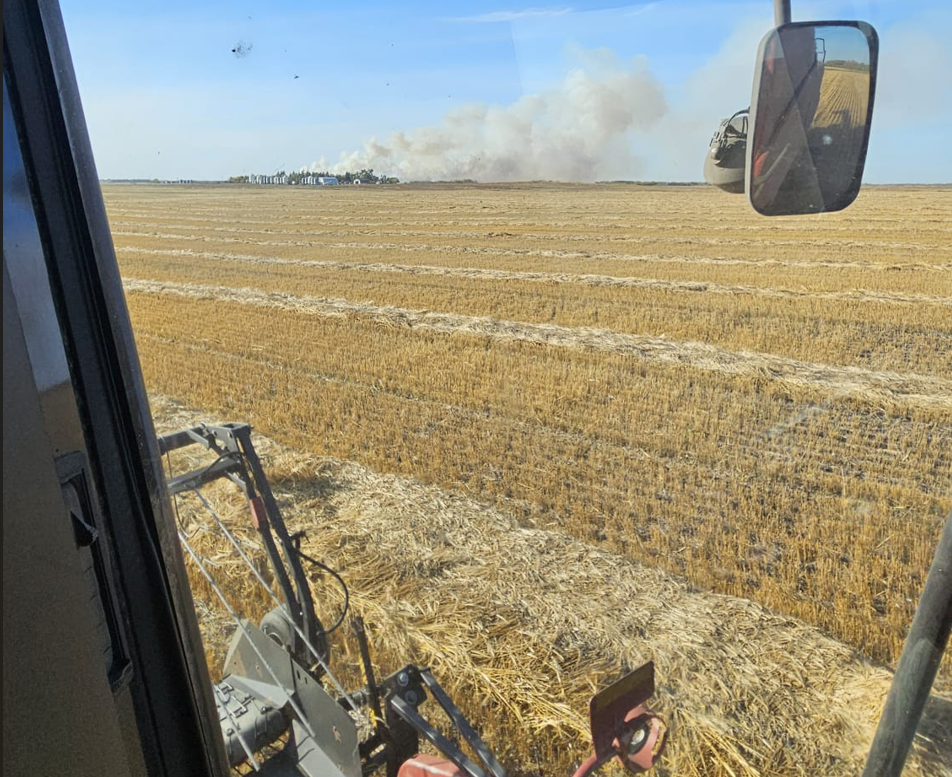 Harvest season has an increased wildfire risk due to dry landscapes and increased human activity.
Agricultural activity is the primary cause of human related wildfires in the Peace River Forest Area. Improper burning practices, heavy equipment, and off highway vehicles accounted for 51% of all human caused wildfires in the Peace River Forest Area in 2025.
Prevention and safety are key to protecting farms, communities, livelihoods, and lives.
Safe burning practices
Any burning in the Forest Protection Area (FPA) requires a fire permit from March 1 to October 31, with the exception of a campfire.
Fire permits ensure safe burning practices and allow staff to know where burning is approved, allowing firefighters and aircraft to fight wildfires. Municipalities may have individual rules and restrictions in place. Contact your local municipality for more information.
See Safe burning for more details.
Heavy equipment
Steps can be taken to lower the risk of wildfire from heavy equipment. Check for fire hazards before starting work each day, such as:
- Any buildup of crop residue around the engine, exhaust system, belts and chains.
- Damaged exhaust components.
- Worn or frayed belts.
- Signs of leaking fluids, oils and fuels.
Combines and balers can present different types of problems. Check for:
- Buildup of combustible crop residue around the engine and exhaust system.
- Concealed drive belts and pulleys that can contribute to the accumulation of crop residue that can overheat due to friction.
Regular maintenance is the key to preventing wildfires caused by agricultural equipment. Remember to:
- Keep bearings and gears well lubricated to prevent buildup.
- Remove crop residue from areas prone to generate normal heat.
- Replace worn and broken belts as soon as possible.
- Keep lubricants at proper levels.
- Repair or replace damaged or worn-out exhaust systems – in addition to a good exhaust system, a spark arrester can be installed to catch burning particles.
- Repair damaged electrical wiring.
- Keep one or more fire extinguishers on machinery and know how to use them.
Hay bales
When baled at too high of a moisture level, hay bales are at risk of spontaneous combustion. This occurs when the hay metabolizes or "burns" the sugars in the plant, heating the tightly packed core. Once the internal temperature of the hay bale reaches 80°C, the heat, fuel, and pressure cause the bale to combust and burn. When sitting out in a dry field, burning bales can be an ignition source of wildfires.
Prevention:
- Ensure crop moisture levels are low when baling.
- Store bales in a dry, inflammable location.
Monitoring:
- Perform routine temperature checks via probe.
- Routinely check for a musty-sweet fermentation smell from bales.
Suppression:
- In the event a hay bale begins to rise in temperature, pull the bale apart and wet the hay away from other feed and buildings.
- In the event of a hay bale fire, keep your distance and call 911.
For more information, see Preventing wildfires on the farm.
Fall fire safety
When recreating in the fall on public land to hunt, camp, or use off-highway vehicles, caution must be taken to prevent wildfires.
Cooking and warming campfires
- Use existing campfire rings, both official and unofficial.
- Select a site away from dry grass, brush, leaves, logs, trees and overhanging branches, and peaty areas.
- Use kindling and small branches for a smaller, more manageable fire.
- Keep water nearby.
- When leaving the site, ensure the fire is completely out.
For more information, see campfires on public land.
Off-highway vehicles
- Before riding, clean out hot spots and remove debris from the machine.
- After riding through muskeg or tall grass, stop and remove any build-up from the machine.
- Carry firefighting equipment such as a small shovel, collapsible pail or fire extinguisher.
- Wash the OHV and keep it clean – do not wash in streams and creeks.
- Make sure the muffler and spark arrestor are working properly.
- Stop frequently. Take the time to knock debris from the machine’s hot spots. If the debris is smouldering, soak it, stir it and soak it again to make sure it is extinguished.
For more information, see Off-highway vehicle safety.
Published on October 7, 2026 4:19 pm
Wildfire season runs March 1 – October 31.
Find active fire advisories, restrictions, bans, forest closures, off-highway vehicle restrictions and what activities are allowed.
How to choose your campfire site, prepare your campfire and properly extinguish it when you are done.
Contact info
Tannis McNabb
780-617-4851
[email protected]