The wildfire danger is high across the northern portion of the Slave Lake Forest Area. For areas around and south of Lesser Slave Lake, the wildfire danger is low to moderate.
Warm and dry conditions are expected over this long weekend and there is a high chance of thunderstorms with lightning.
While some areas have received rain, amounts vary. The wildfire danger will continue to be elevated, as just a few hours of warm weather will quickly dry up the moisture.
Firefighters are urging everyone to do their part to prevent wildfires this long weekend. Please be cautious with campfires, off-highway vehicles and any activity that could spark a fire.
With current and expected lightning, fire lookout observers are watching for smoke and firefighters supported by helicopters and airtankers are ready to respond to any new wildfires that may start.
SWF122, located approximately 1.5 km west of Bigstone Cree Nation on the north end of North Wabasca Lake, has been extinguished.
Currently there are 15 active wildfires in the Slave Lake Forest Area.
To view wildfires on a map visit the Alberta Wildfire Status Dashboard.
Since January 1, 2025, there have been 127 wildfires in the Slave Lake Forest Area, resulting in a total burned area of 388,294 hectares (ha).
Red Earth East Complex
The Red Earth East Complex includes 10 wildfires that are located east of Highway 88: SWF085, SWF089, SWF091, SWF092, SWF094, SWF095, SWF099, SWF100, SWF110 and SWF115.
View the latest map of the Red Earth East complex.
SWF085, which impacted the community of Chipewyan Lake, is 138,057 ha in size and is classified as out of control. Firefighters in a helicopter continue to monitor the wildfire and have reported little to no fire activity observed over the past several days. The wildfire threat to the community of Chipewyan Lake remains minimal.
SWF089, located approximately 5.5 km east of Peerless Lakes, is 12,964 ha in size and is classified as out of control. Firefighters supported by helicopters with buckets are working on the southwest side of the wildfire. As ground access improves, firefighters will expand operations along the south side and gradually move east to extinguish remaining hot spots.
SWF092, located approximately 7 km southeast of Red Earth Creek and 8.5 km west of Trout Lake, is 78,323 ha in size and is classified as out of control. Firefighters continue working on the east side of the wildfire to extinguish hot spots identified through the infrared scans. Along the northwest side closest to Red Earth Creek and Loon Lake, heavy equipment continues building containment lines and firefighters are extinguishing hot spots.
SWF095, located approximately 5 km from Peerless Lake and 7 km from Trout Lake, is 1,331 ha in size and is classified as out of control. Firefighters continue to work on strengthening the containment line on the southwest side of the perimeter closest to the community of Peerless Lake. Firefighters are also working their way further into the interior of the fire, looking for and extinguishing hot spots. Wildland Urban Interface (WUI) crews continue to test pumps and sprinkler setups daily in the communities of Peerless Lake and Trout Lake. Firefighters report very minimal smoke or fire activity over the past few days.
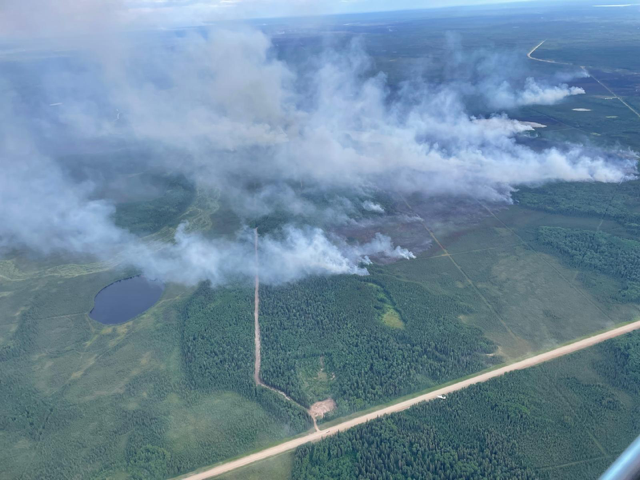 SWF100 experienced increased fire activity and growth yesterday afternoon. June 28, 2025
SWF100, located approximately 5 km west of Peerless Lake, is 17,308 ha in size and is classified as out of control. Yesterday afternoon, SWF100 exhibited increased fire activity and growth on the west side of the wildfire, south of Highway 686. Helicopters with buckets and airtankers were deployed to slow the wildfire spread. With winds from the west, the wildfire was spreading back into a previously burned area. At this time, this wildfire does not pose a threat to the communities of Red Earth Creek or Loon Lake, however smoke will remain visible in the area over the coming days. Firefighters supported by helicopters with buckets are working to extinguish hot spots in this new area of growth.
Evacuation orders remain in effect for the following communities
Firefighters are working extremely hard, but at this time, it is not safe for the residents of these communities to return home. Multiple hot spots remain active, firefighting operations are ongoing and the wildfire perimeters have not yet been fully secured.
For information about the wildfires in the Red Earth East Wildfire Complex, please email [email protected]
Blue Sky and Edith Lake wildfires (SWF088 and SWF076)
The Blue Sky Wildfire (SWF088), located 22 km north of Marten Beach is 13,684 hectares in size and is classified as being held. Firefighters, supported by heavy equipment and helicopters, continue to extinguish hot spots identified by the infrared scan.
View the latest map of the Blue Sky wildfire.
The Edith Lake wildfire (SWF076), located approximately 8 km north of Swan Hills, is 16,852 hectares in size and is classified as under control. Firefighters continue to patrol for hot spots with the interior of the wildfire and heavy equipment continues to reclaim containment lines.
View the latest map of the Edith Lake wildfire.
For more information these wildfires, contact Leah Lovequist at 780-849-0945 or [email protected]
Fire permits are required
From now until October 31, fire permits are required for any burning, except campfires, in the Forest Protection Area of Alberta. Fire permits are free and are now available online. Visit Get a fire permit for information on how to make a request online.
Fire permits are also still available, by request, from your local forest area office.
- Wabasca 780-891-3860
- Slave Lake 780-849-7377
- High Prairie 780-523-6619
Celebrating with fireworks this long weekend
The use of fireworks within the Forest Protection Area (FPA) is prohibited without written permission from a Forest Officer. Written permission is required year-round. To obtain written permission to shoot, discharge, detonate or ignite fireworks within the FPA call your local forest area office.
Choose a safe campfire site
When visiting campgrounds or recreational areas, use the designated stoves, fire rings or fire pits. These are designed to keep fires from spreading and are the best choice for a safe campfire. When outside of a campground, use sites that are clear of dry grass and vegetation. Clear the site down to bare mineral soil, place rocks in a ring, keep it sheltered from wind and always have water nearby to extinguish your campfire.
Never leave a campfire unattended. When you're done, always soak it, stir it and soak it again until the ashes are cool to the touch.
When riding your off-highway vehicle
Off-highway vehicles (OHVs) have exhaust systems that get hotter than 200°C. At these temperatures, built-up materials (such as grass, muskeg, moss or other debris) can heat up, smoulder and ignite. These can fall to the ground as you are riding, starting a wildfire.
To help prevent wildfires when riding your OHV, stop frequently to remove any build- up of debris on your machine's muffler and always carry firefighting equipment such as a small shovel, collapsible pail or fire extinguisher.
Contact info
Leah Lovequist
780-849-0945
[email protected]
Published on June 28, 2025 2:17 pm