The government is changing how it manages wild boar to protect Alberta’s livestock industry.
The following amendments to the Pest and Nuisance Control Regulation are in force as of December 1, 2025:
- Wild boar are now a pest in all circumstances, not just when at large.
- This means that it is illegal to keep, import, purchase or otherwise obtain, export, sell or otherwise dispose of or transport live wild boar or wild boar hybrids without a permit.
- Learn more about the options that were available to help wild boar owners adjust to these changes including a voluntary exit with compensation through the Wild Boar On-Farm Exit Program or continuing to farm wild boar through grandfathering.
- It is illegal to hunt or trap wild boar in Alberta, with certain exceptions.
Overview
Detection and monitoring are key to eliminating the threat of invasive wild boar in Alberta. You can help by learning to identify wild boar and signs of their activity and reporting sightings.
What wild boar look like
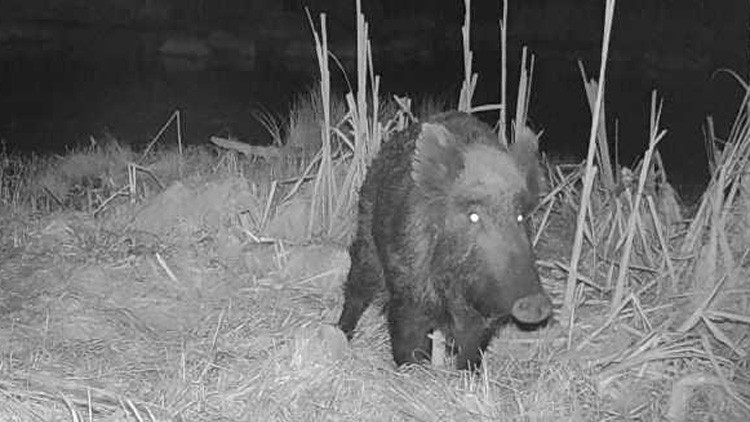
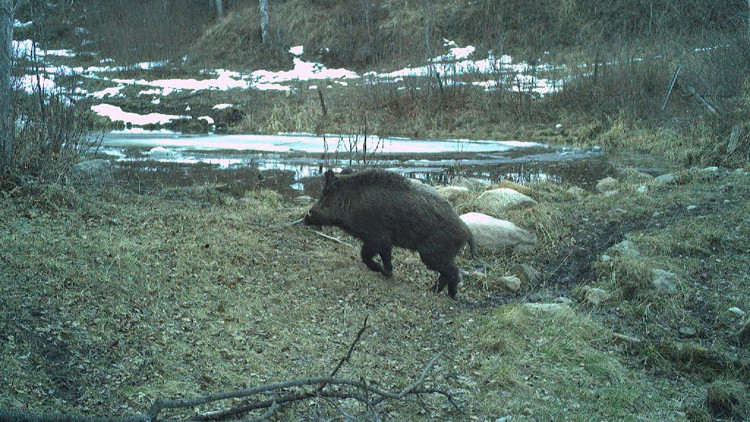
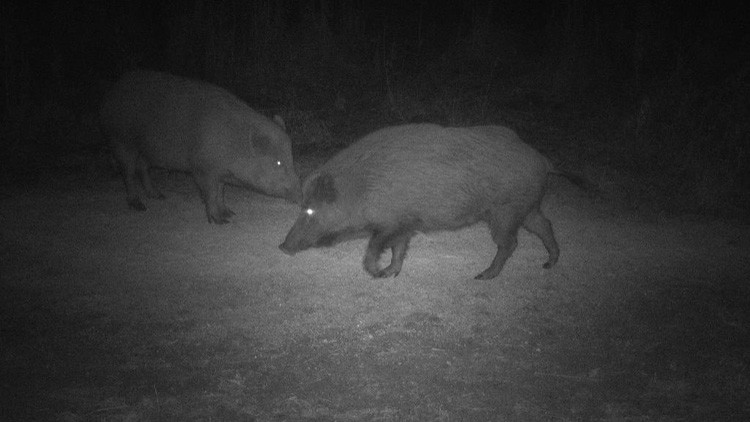
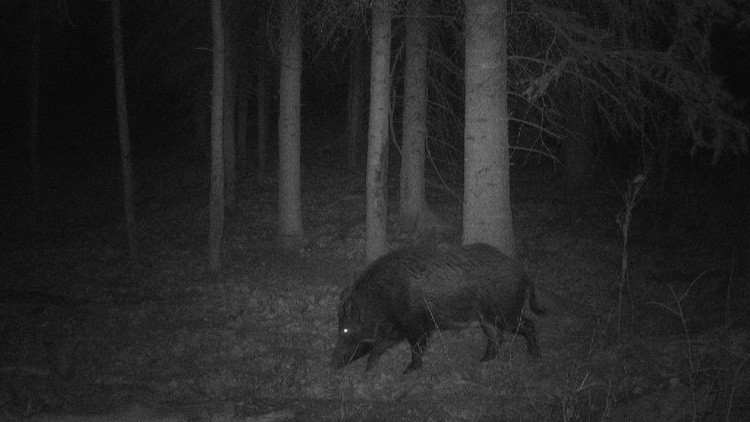
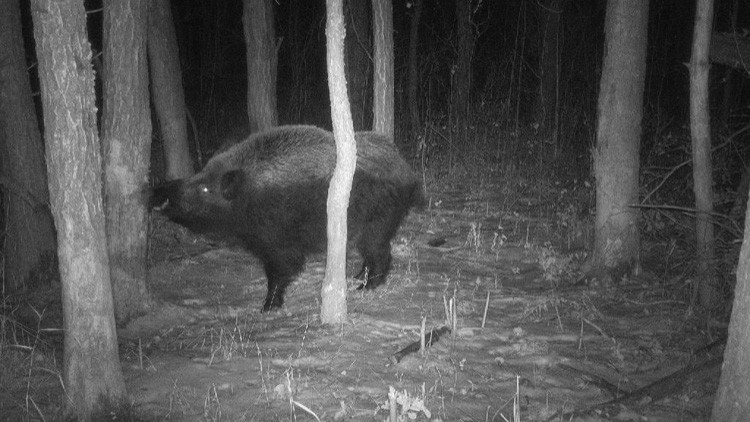
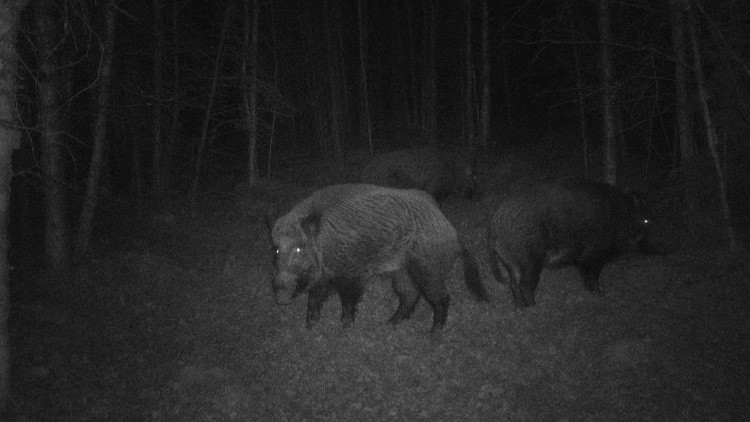
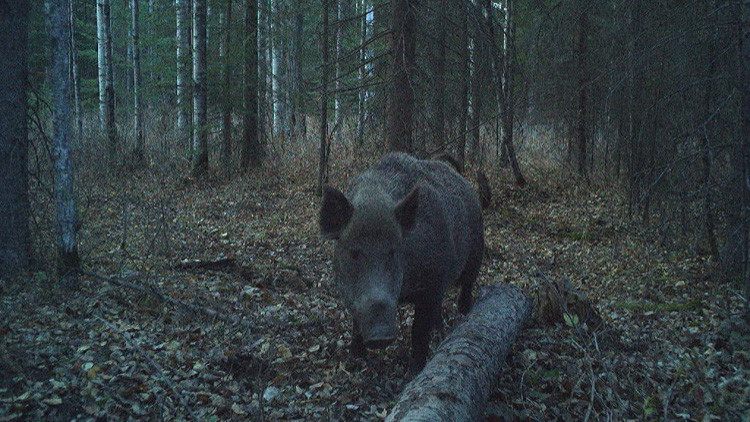
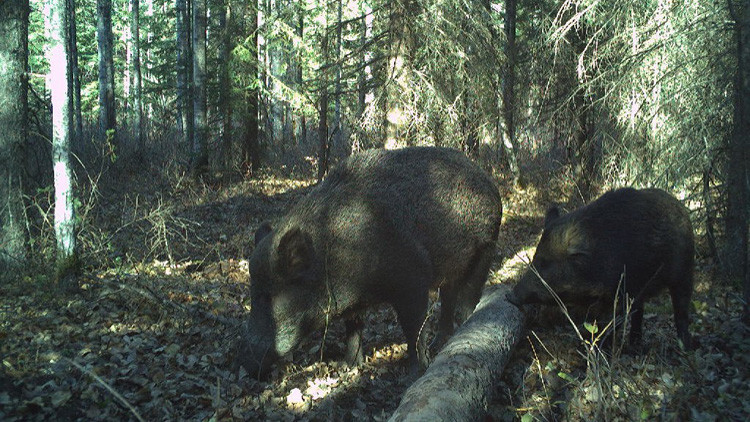
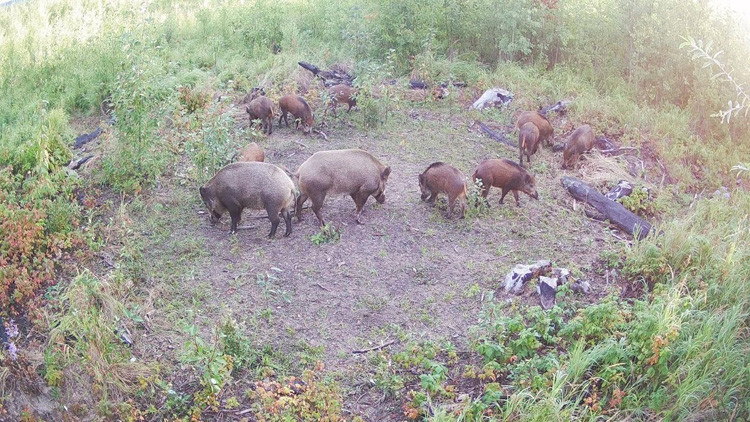
Look for the following features to help identify wild boar:
- elongated snout with flat facial profile (domestic pigs often have a shorter, dished facial profile)
- dark coat colour with light tipped bristles
- coarse hair or ridge along the back
- muscular shoulders with small hams or loins
- straight tail
- erect ears
- striped piglets
Examples of wild boar
All photos are taken in Alberta
Examples of domestic pigs that may be mistaken for wild boar
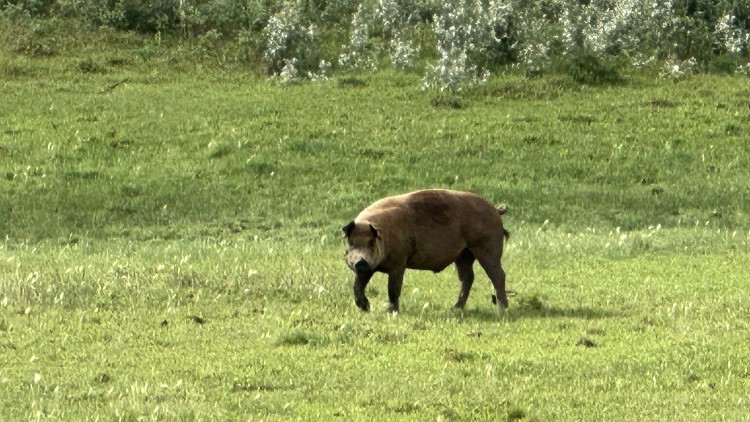
Domestic pig, likely a Duroc cross. Credit: Les Myers
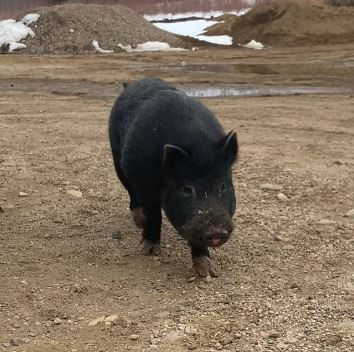
Domestic Pot-bellied pig. Credit: Brad Semeniuk
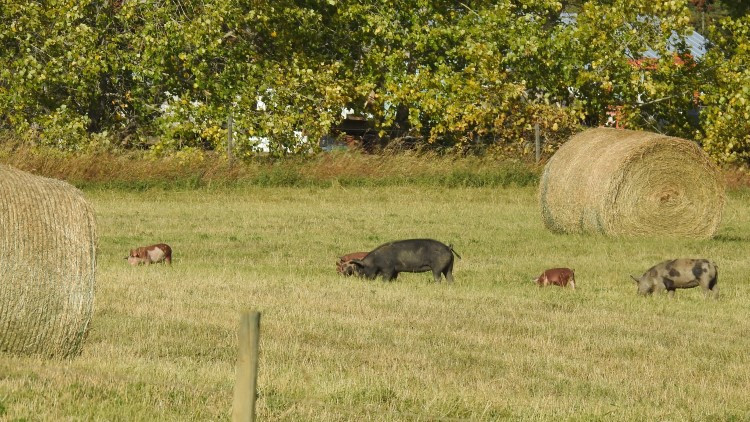
Domestic pig, likely a Large Black cross. Credit: Daniel Arndt
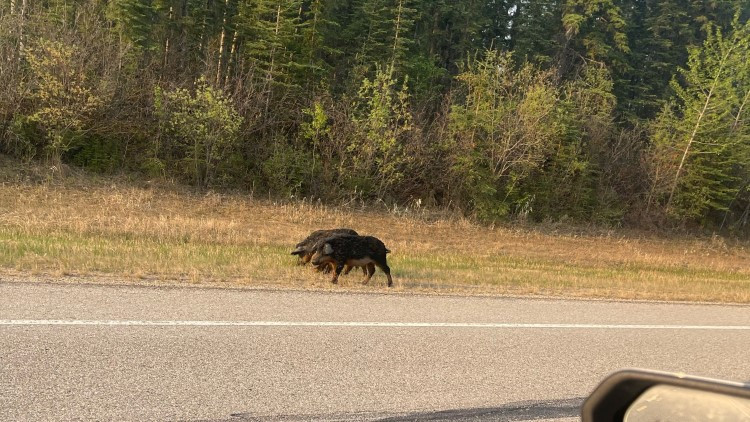
Domestic Mangalica pigs. Credit: Submitted photo.
Hair
If wild boar are in the area you will find hair caught on fence lines and on the bark of trees where they rub. The coarse guard hairs of wild boar and domestic pigs have a distinctive fork or split at the ends.
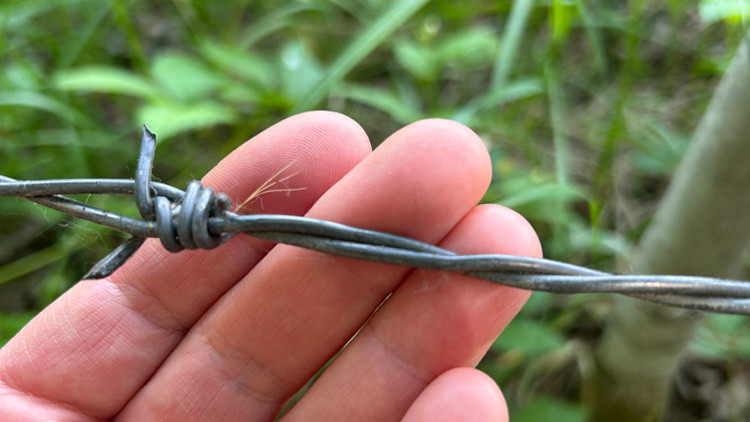
Wild boar hair. Credit: Agriculture and Irrigation
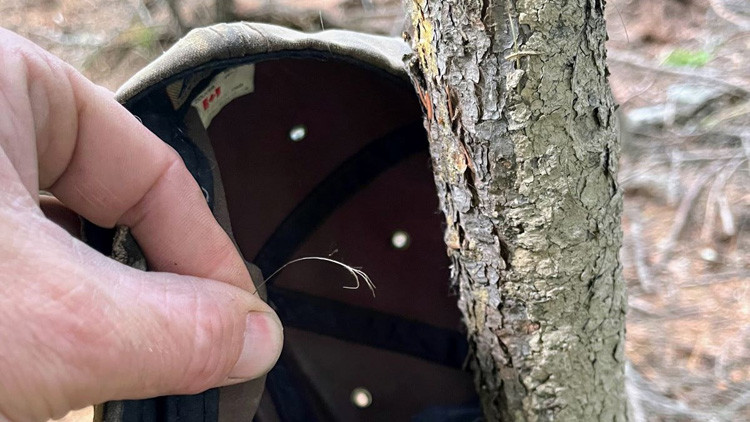
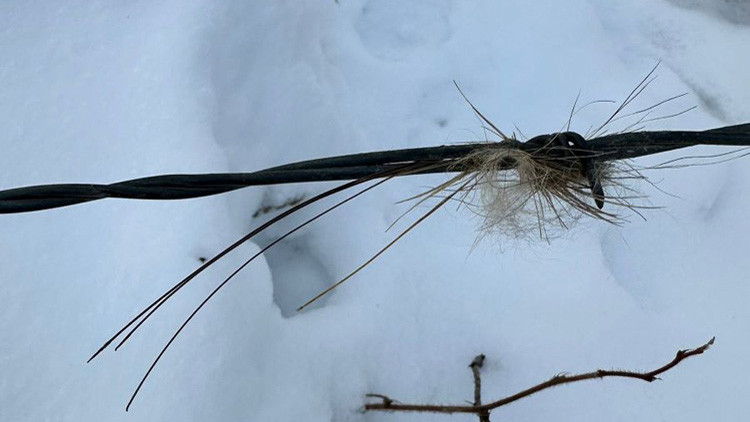
Wild boar hair. Credit: Agriculture and Irrigation
Rubs
Wild boar rub on trees, leaving distinctive smooth, bare, or muddy areas. You can often find hair caught in the bark where they have rubbed. You may also see where they have slashed the trees, often spruce, with their tusks.
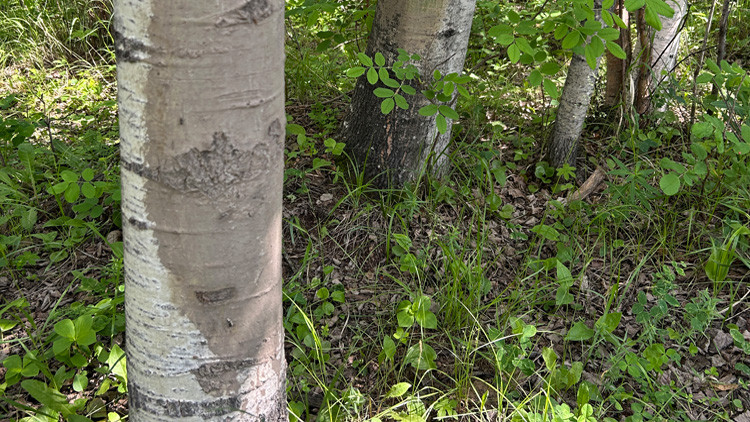
A muddy rub left by a wild boar. Credit: Agriculture and Irrigation
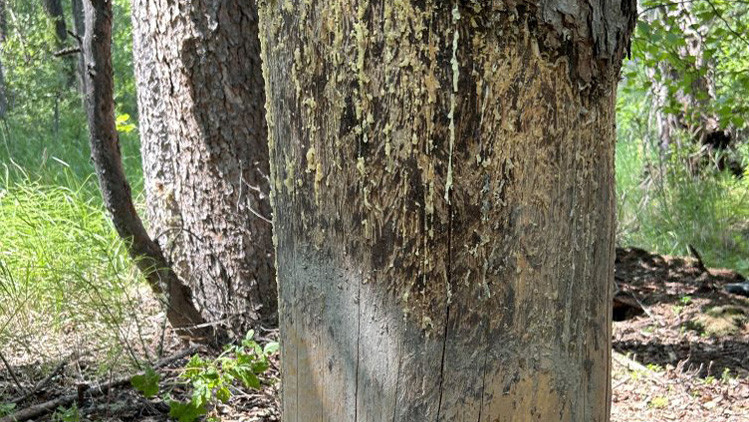
A rub that has been used for a long time by wild boar. Credit: Agriculture and Irrigation.
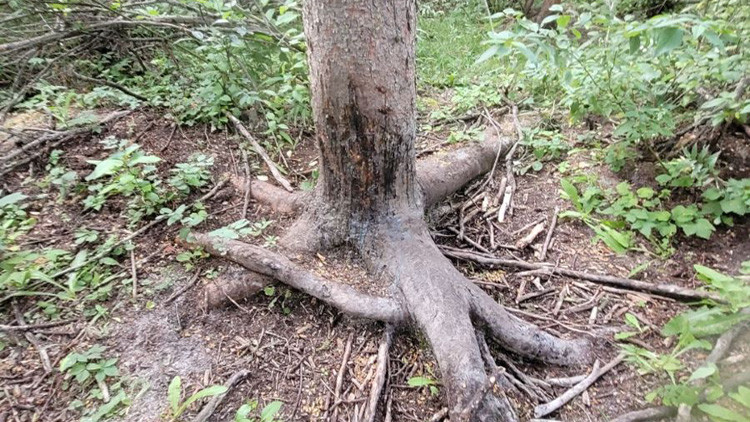
A spruce tree with signs of tusking and rubbing by wild boar. Credit: Agriculture and Irrigation.
Droppings
Because wild boar are omnivores, their droppings can be highly variable and may be confused with bear or deer droppings. This makes droppings are a less reliable sign of wild boar.
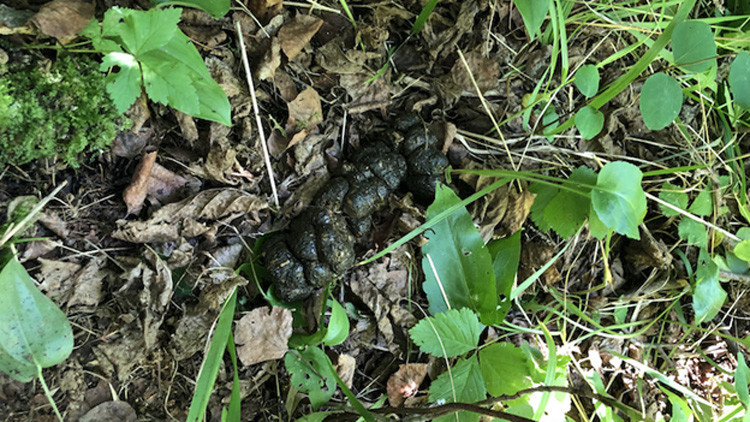
Wild boar droppings. Credit; Agriculture and Irrigation
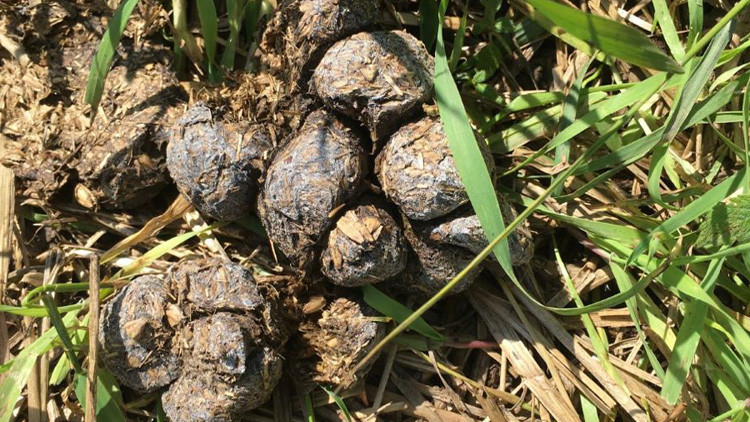
Wild boar droppings. Credit; Agriculture and Irrigation
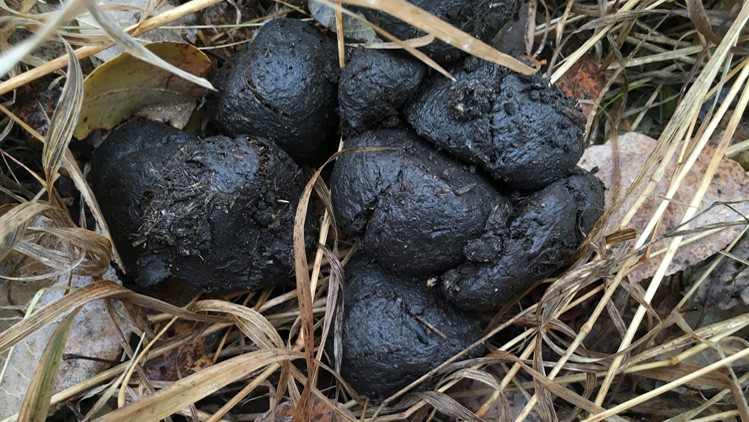
Wild boar droppings. Credit; Agriculture and Irrigation
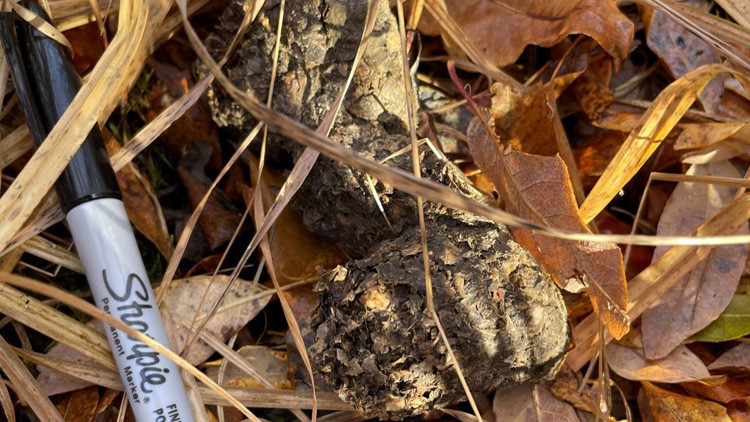
Wild boar droppings. Credit; Agriculture and Irrigation
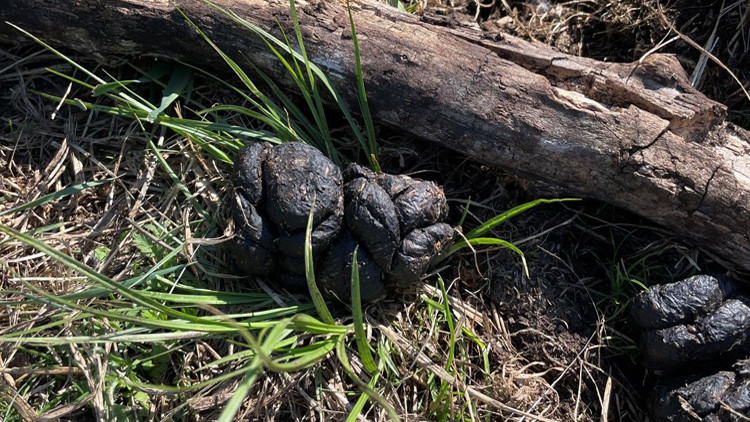
Wild boar droppings. Credit; Agriculture and Irrigation
Rooting and crop damage
Wild boar root for their food, which can damage habitat, agricultural crops and pasture. Look for signs of “pushing” forward vs the “pawing back” done by deer or bears.
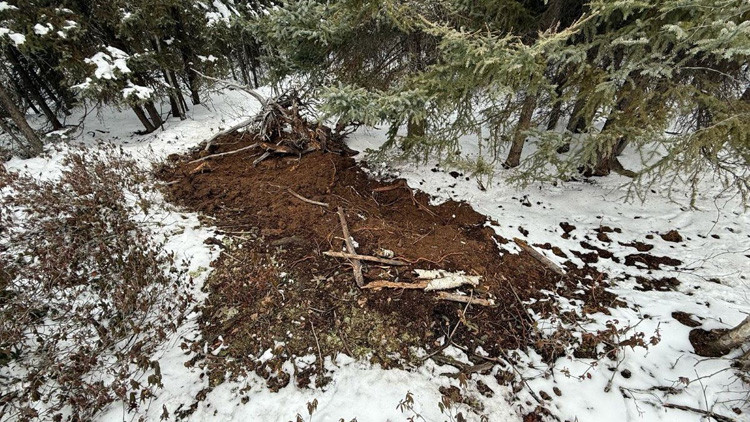
Wild boar rooting in peat during winter. Credit: Agriculture and Irrigation.
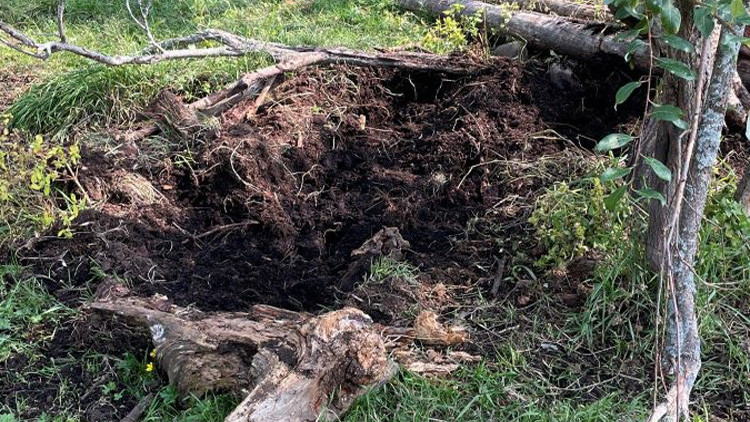
Wild boar rooting. Credit: Agriculture and Irrigation
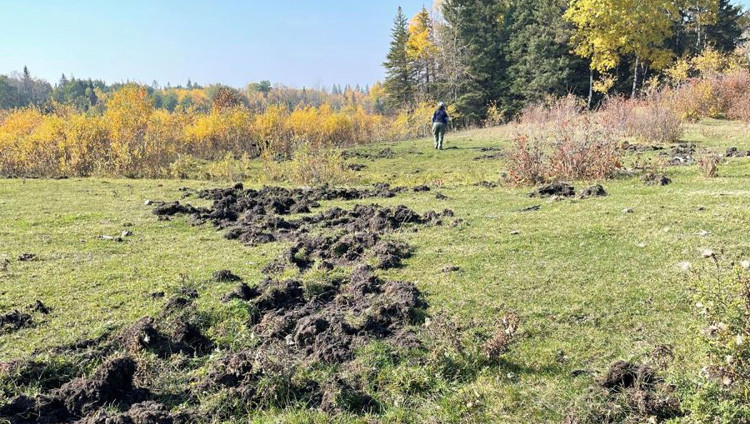
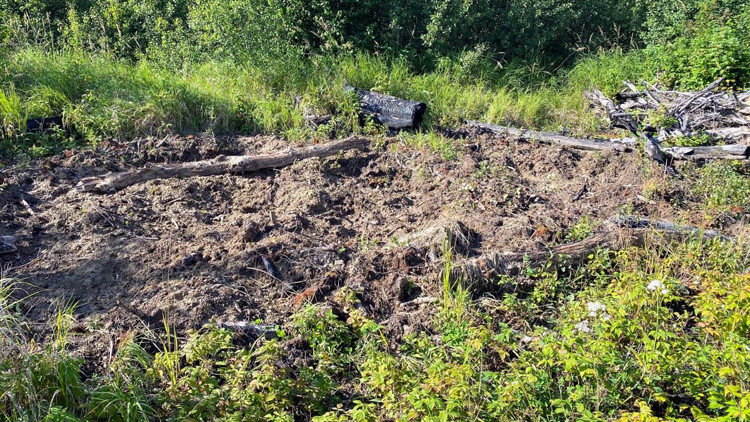
Wild boar rooting. Credit: Agriculture and Irrigation.
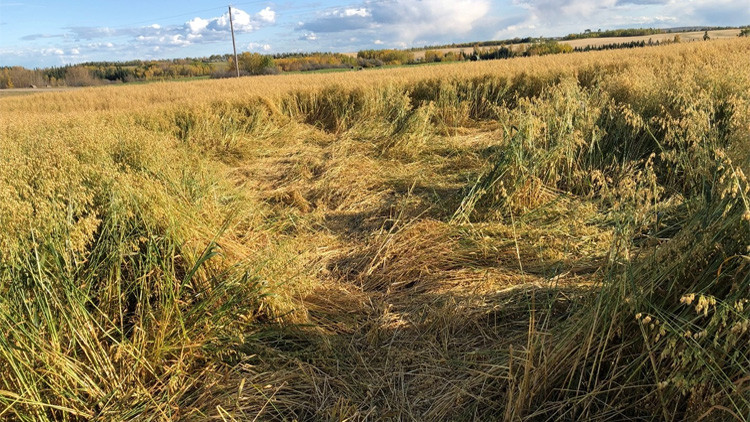
Crop trampled by wild boar. Credit: Agriculture and Irrigation.
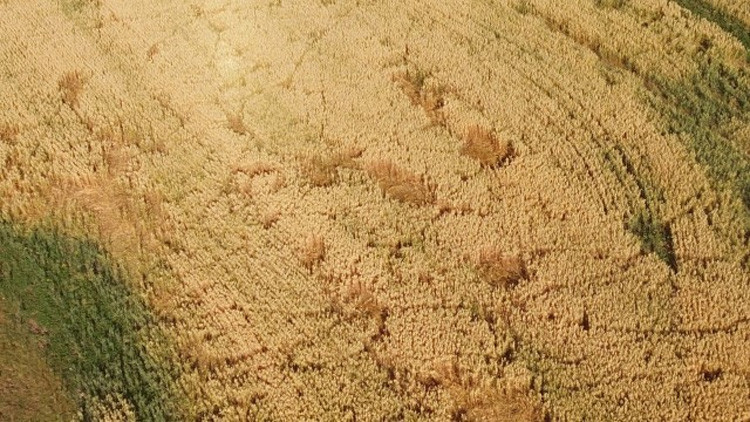
Damage to an oat crop caused by wild boar rooting and trampling. Credit: Agriculture and Irrigation.
Wallowing
Wild boar wallow to stay cool, as protection for parasites and as part of their social behaviour. They prefer to wallow in hard-bottomed ground. Near wallows, look for mud on nearby fences or trees.
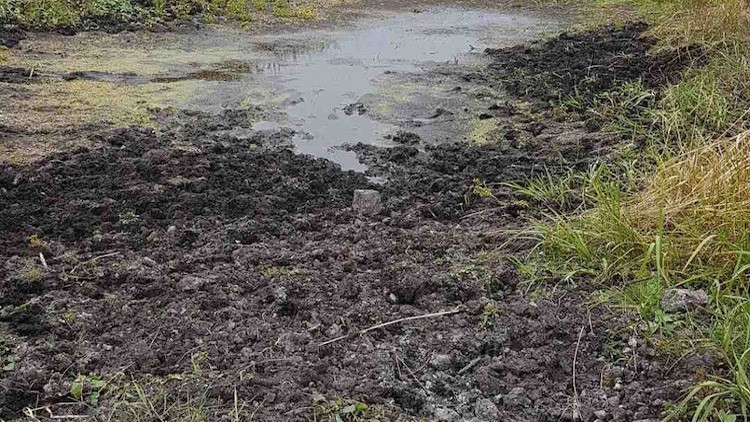
A wild boar wallow. Credit: Agriculture and Irrigation.
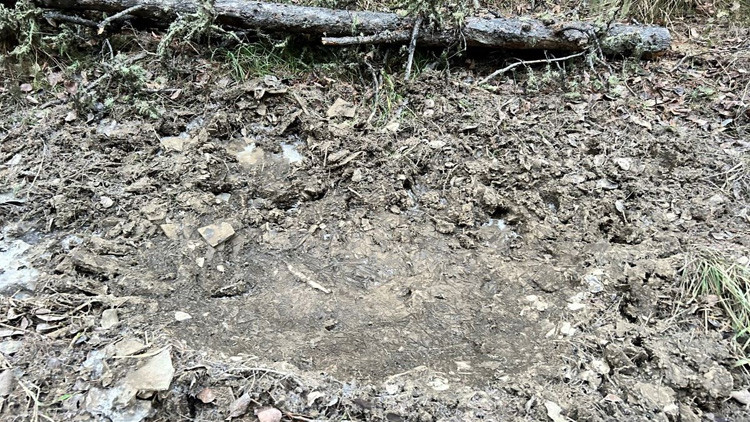
A wild boar wallow that has dried out. Credit: Agriculture and Irrigation.
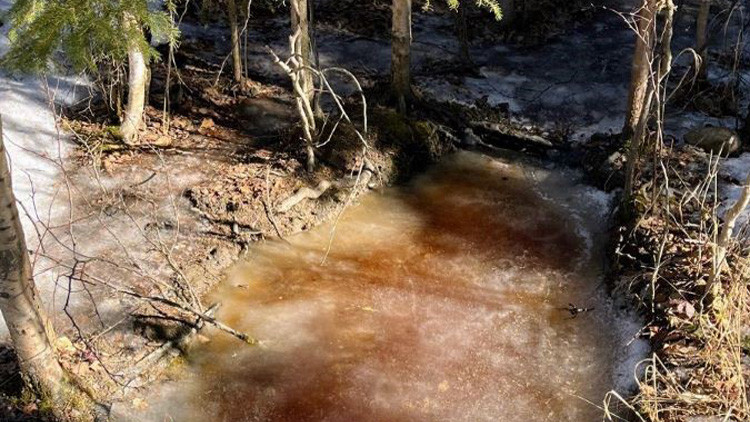
A wild boar wallow in spring. Credit: Agriculture and Irrigation.
Tracks and trails
Tracks are similar to deer, but with rounded toes and dew claws far outside the main track. Consider the track spacing and in snow look for a trench made by the wild boar’s belly dragging in the snow.
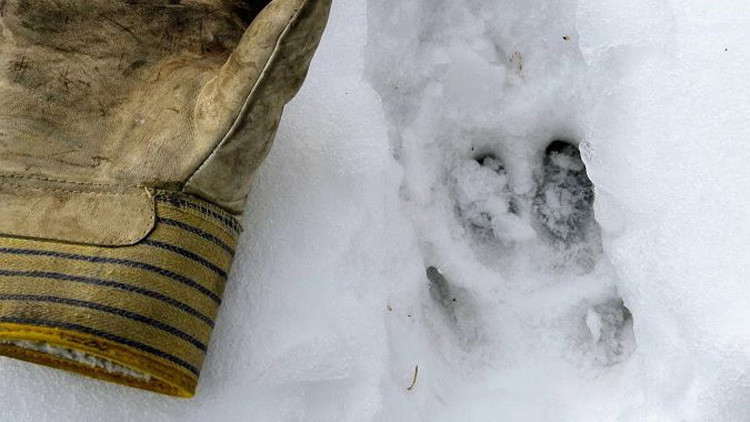
Wild boar tracks in snow. Credit: Agriculture and Irrigation
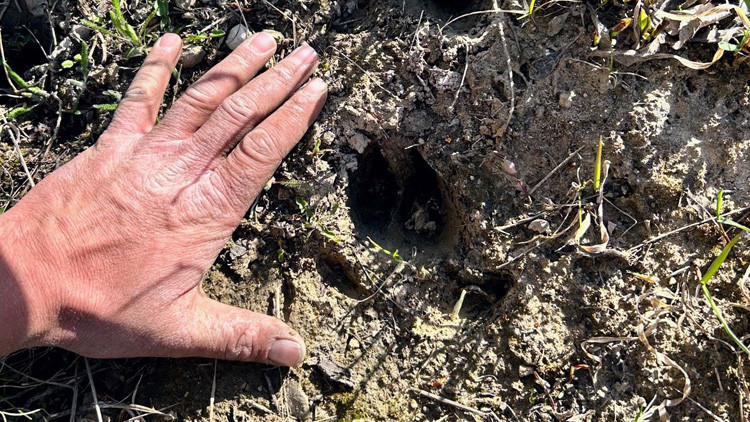
Wild boar tracks in mud. Credit: Agriculture and Irrigation
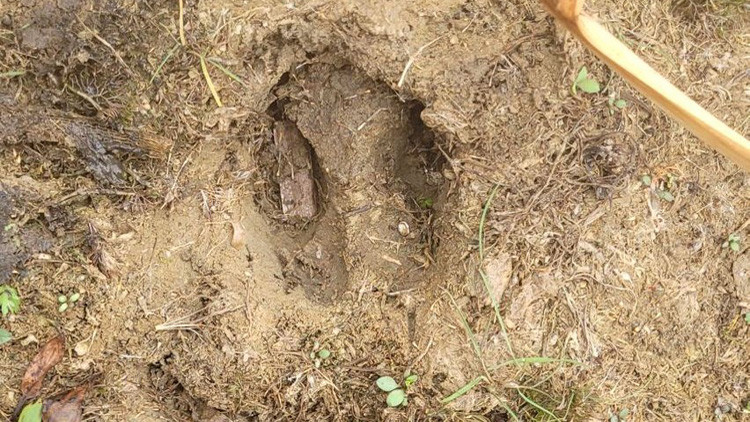
Wild boar tracks in mud. Credit: Agriculture and Irrigation
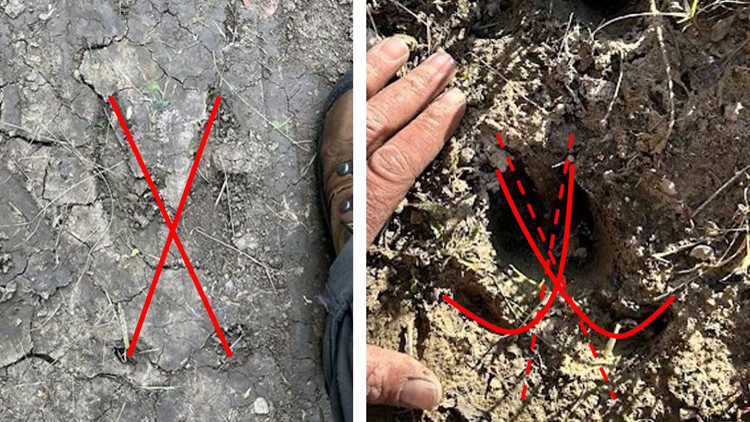
Comparison of deer and wild boar track, showing the difference in track shape and placement of the dew claws. Credit: Agriculture and Irrigation.
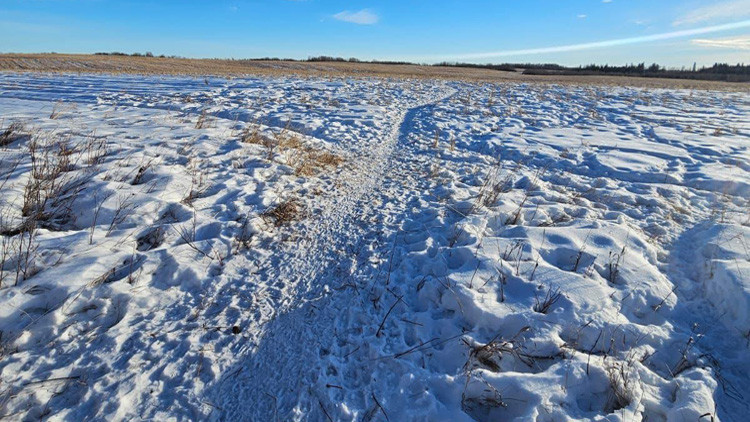
Trail made by a sounder (group) of wild boar. Credit: Agriculture and Irrigation.
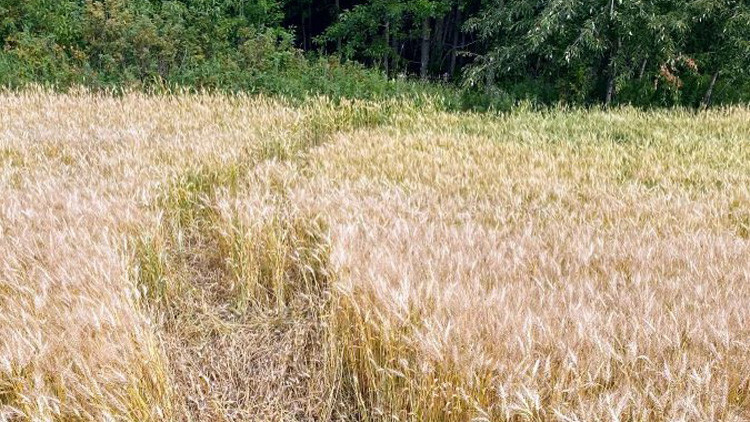
Trail made by a sounder (group) of wild boar. Credit: Agriculture and Irrigation.
Wild boar nest
Wild boar use nests for farrowing and resting. Look for flattened areas where vegetation has been piled.
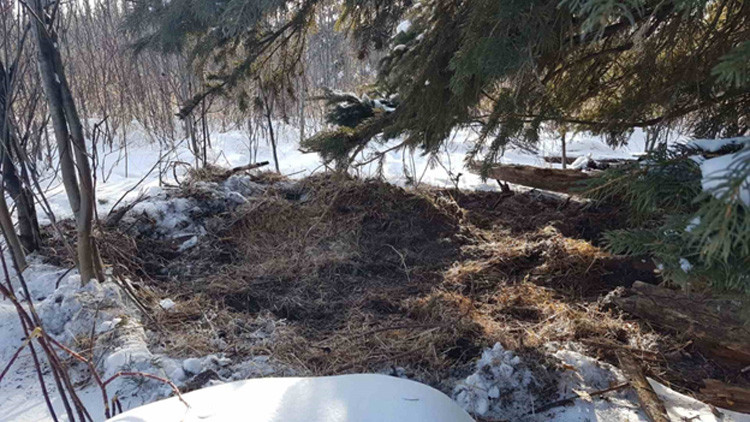
Wild boar nest. Credit: Alberta Pork.
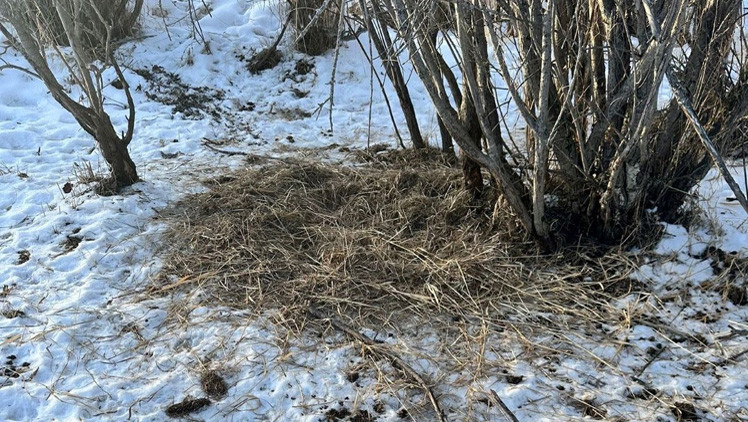
Wild boar nest. Credit: Agriculture and Irrigation.
Report wild boar
Squeal on Pigs to help protect Alberta from wild boar! Report all sightings and signs of wild boar activity.
- Safely take a picture.
- Note the location.
- Fill in our online reporting form: