Some services are currently unavailable due to maintenance and standard precautionary measures. Services are expected to be restored as soon as possible. We apologize for the inconvenience this may cause.
Moderate wildfire danger
The wildfire danger in the Rocky Mountain House Forest Area remains moderate. Parts of the forest area have benefited from recent precipitation; however, other areas are seeing grass and other small vegetation begin to dry out as the season progresses, making them more susceptible to wildfire. Conditions can vary across the area, everyone spending time outdoors is reminded to recreate responsibly and do their part to prevent human-caused wildfires.
September long weekend
As Albertans enjoy the last long weekend of summer, there are several ways you can help prevent human-caused wildfires:
- Keep campfires small, safe and under control. Never leave a fire unattended. Before you leave your site or turn in for the night, soak your campfire with water, stir the ashes and soak it again until it is cool to the touch.
- Campfire rules vary by location, including in areas managed by Alberta Parks and Parks Canada. Before travelling, check Fire Bans in Alberta Parks and Alberta Fire Bans for your destination to confirm whether campfires are permitted and whether any additional restrictions are in place.
- If operating off-highway vehicles, stop often to check for and remove grass or other debris that can build up around your machine’s exhaust and hot spots. Carry firefighting tools such as a shovel, pail and extinguisher.
Wildfire situation
There are currently no active wildfires in the Rocky Mountain House Forest Area. Since January 1, 2026, the Rocky Mountain House Forest Area has responded to 65 wildfires, which have burned over 1,200 hectares.
While temperatures are currently cooler, conditions can change quickly and wildfire season is not over. The risk of wildfire remains, and resources are in place to respond quickly to new wildfires, including airtankers based in the Rocky Mountain House Forest Area. Residents may see or hear aircraft in the area as crews conduct training or practice flights. This aircraft activity is part of ongoing wildfire preparedness and does not necessarily indicate an active wildfire.
For up-to-date information on wildfire locations, status, size and statistics, visit the Alberta Wildfire Status Dashboard.
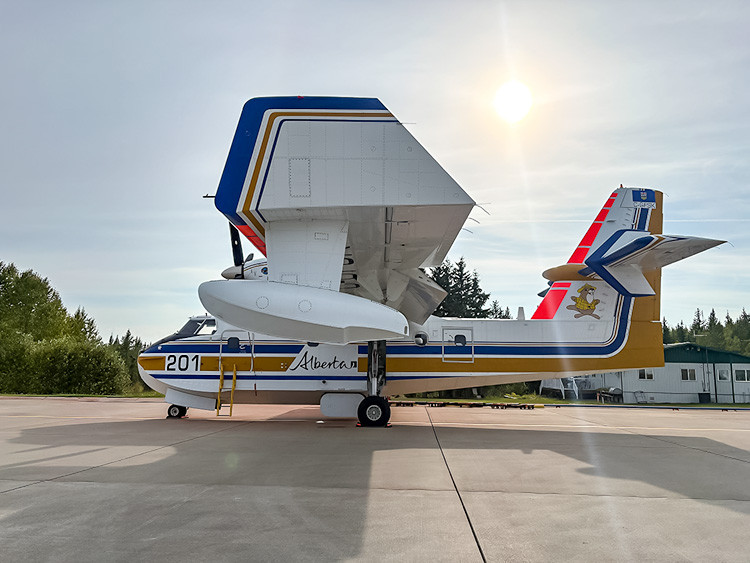 A CL-215T (skimmer) staged at the Rocky Mountain House Forest Area Airtanker Base. These aircraft can scoop more than 5,000 litres of water from nearby lakes and transport it to wildfires for suppression operations.
Agriculture wildfire prevention
As harvest approaches, producers are reminded to take precautions to prevent wildfires. Check equipment regularly for built-up debris, grass and dust, and remove any material that could ignite from hot machinery. Carry firefighting equipment when operating machinery in dry conditions and stop work if conditions become unsafe. For more information, see the farm and acreage guide to reducing the risk from wildfire.
Contact info
Allanah McLean
403-418-5023
[email protected]
Published on September 3, 2026 2:00 pm