The wildfire danger in the Rocky Mountain House Forest Area remains moderate. A lack of snow in many parts of the region is increasing the wildfire danger. As the warm and dry trend continues, more areas of dead and dry vegetation are being exposed leading to increased risk. Moderate temperatures are forecast in the short term, before an anticipated return to more winter-like conditions and a potential decrease in wildfire danger.
Warm temperatures, winds and dry vegetation create ideal conditions for wildfires to ignite and spread.
Wildfire situation
RWF006 is now classified as being held at approximately 250 hectares. Firefighters from the Rocky Mountain House Forest Area, along with industry partners, remain on site working to bring this wildfire under control. It is located 2.5 km west of the Forestry Trunk Road (Highway 40/734) and north of the James River. This wildfire is not currently a risk to nearby communities or infrastructure, however, smoke from the fire may be visible.
RWF007 was assessed on February 11 and is classified as being held at 0.1 hectares. The cause of this wildfire remains under investigation.
The Rocky Mountain House Forest Area has responded to seven wildfires since January 1, 2026.
For up-to-date information on wildfire locations, status, size and statistics, visit the Alberta Wildfire Status Dashboard.
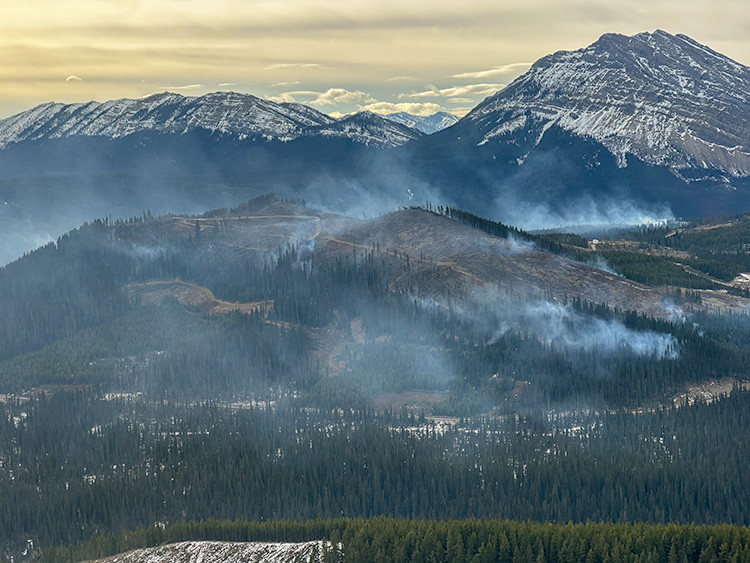 This view of RWF006 taken on February 11, shows the lack of snow in the area and some of the difficult terrain firefighters are working with.
Check winter burn sites
Please revisit any burn sites from earlier in the winter. Even if a fire appears fully extinguished, you should closely monitor the area for any signs of activity. Fires can remain dormant under snow or vegetation and may quickly reignite during periods of strong winds.
Many winter burning projects are currently visible across the landscape, which can lead to smoky conditions. While winter is generally the safest time to conduct these burns, the warmer temperatures and strong winds in the region mean we strongly recommend pausing activities until there is more snow cover and colder conditions, to lower the risk of fire spreading.
For more information on how to conduct safe winter burning, see our safe burning guidelines.
Contact info
Anastasia Drummond
403-818-0938
[email protected]
Published on February 12, 2026 2:13 pm