The wildfire danger in the Slave Lake Forest Area has climbed to moderate due to warm temperatures and strong winds expected over the next several days. Areas of dead grass are highly flammable, and under windy conditions, fires can spread rapidly. Firefighters urge everyone to use caution and report wildfires immediately by calling 310-FIRE(3473).
Fire permit holders must postpone burning if the wind speed increases, as it would exceed the safe conditions outlined on the fire permit.
Wildfire Situation
Since January 1, 2025, there have been nine wildfires in the Slave Lake Forest Area burning a total of 3.66 hectares. All nine wildfires were human caused, with the majority originating from winter burning projects. If you conducted a winter burn, return to the site and ensure the fires are completely extinguished.
To view information about wildfires, their locations and statistics visit the Alberta Wildfire Dashboard.
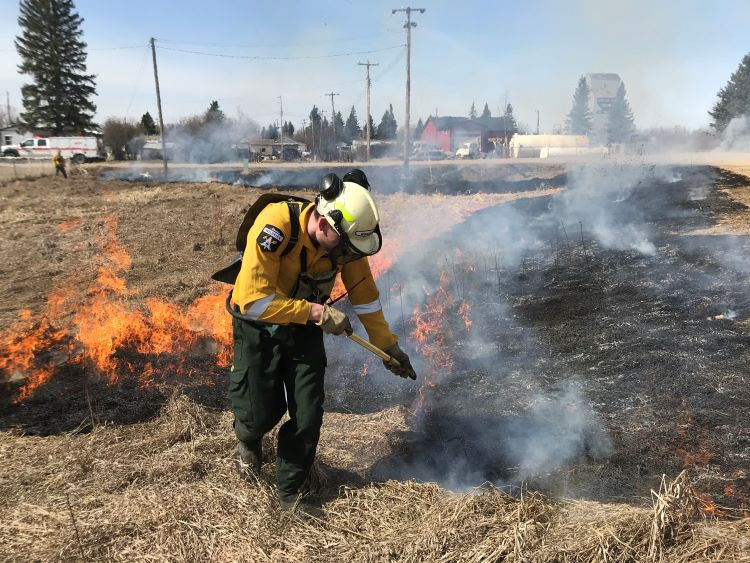 Wildland firefighters conduct controlled burns to reduce wildfire risk.
Firefighters burning
Over the next several weeks, firefighters will be burning areas of dead dry grass around communities in the Slave Lake Forest Area. Burning is an efficient way to remove this extremely flammable fire fuel. Trained firefighters conduct these burns under specific weather conditions to ensure the fires are controlled and to minimize the impact of smoke to roadways and communities.
If you have any questions about these grass burns contact Wildfire Information Officer Leah Lovequist 780-849-0945.
Fire permits required
Alberta’s wildfire season began on March 1st. This means that fire permits are required for burning within the Forest Protection Area, excluding campfires.
Fire permits are free and can be requested online. You may also request your fire permit by calling your local Forestry Office.
- Slave Lake 780-849-7377
- High Prairie 780-523-6619
- Wabasca 780-891-3860
Fire permits help us track what is burning on the landscape. If you are burning without a fire permit or not following conditions on your fire permit, your fire could be considered a wildfire and you could be fined and may be responsible for the costs of fighting the wildfire.
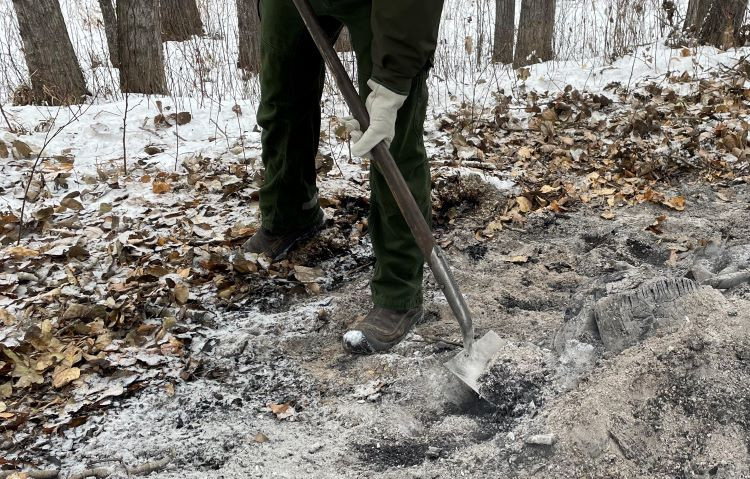 Sifting through the ashes with a shovel to ensure no heat remains after a winter burn.
Revisit winter burn sites
Do your part to prevent spring wildfires, revisit your winter burning sites to ensure the fires are completely extinguished.
- Spread remaining material within the pile and soak with water.
- Check the area and ensure both heat and smoke are no longer being produced by the pile – it should be cool to the touch.
- Check your burn site multiple times in the following weeks to ensure it has not reignited.
Contact info
Leah Lovequist
780-849-0945
[email protected]
Published on April 9, 2025 4:43 pm