Overview
Mice are common throughout Alberta and are well adapted to both rural and urban environments. Several species may be encountered, but the most common include the house mouse and deer mouse. These rodents are highly adaptable and thrive in close association with humans wherever food, water and shelter are available. They reproduce rapidly and often remain hidden within structures, allowing populations to become well established before they are noticed.
Due to their small size, low food requirements and ability to pass through very small openings, mice can survive and reproduce in a wide range of environments. This adaptability has made the house mouse one of the most widespread and successful rodents worldwide.
Identification
Correct identification helps determine behaviour and control methods.
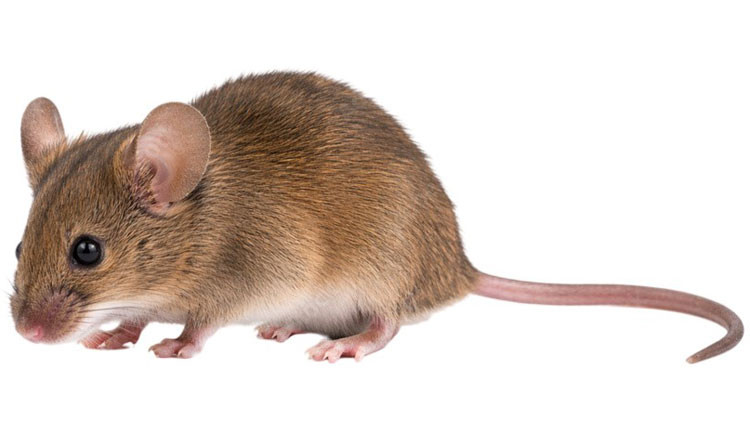
House mouse
- Small and slender with a pointed nose
- Large ears and a long, nearly hairless tail
- Grey to brown in colour
- Common inside buildings
- Adults typically weigh 14 to 28 grams
- Tail is typically as long as the combined length of the head and body
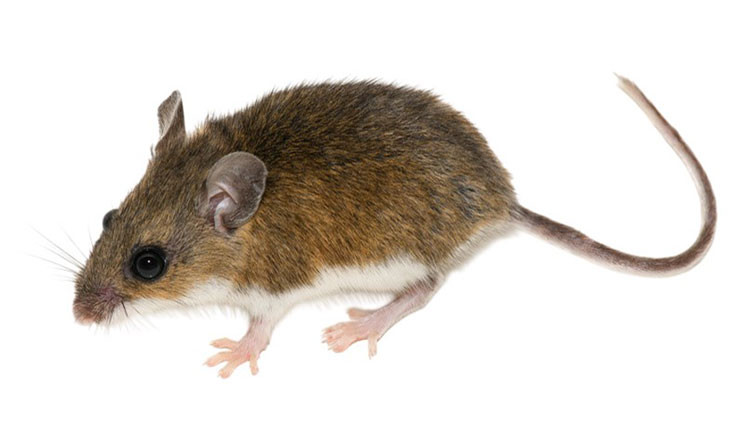
Deer mouse
- White feet and underside
- Brown back with a clearly bi-coloured tail
- Larger eyes than house mice
- Often found in rural settings
Life span
Wild mice generally have a short lifespan, typically ranging from 4 to 12 months depending on species and environmental conditions. They remain active throughout the year and do not hibernate, although some species may reduce activity during extreme winter conditions. Despite their short lifespan, their high reproductive rate allows populations to persist and grow.
Reproduction
Mice reproduce quickly and are capable of building large populations in a short period of time when conditions are favourable. The gestation period is approximately 21 to 23 days, with litters typically consisting of 5 to 6 young.
House mice living indoors can breed year-round and may produce up to 10 litters annually. Young mice develop rapidly, being weaned at about 3 weeks of age and reaching reproductive maturity in as little as 5 to 7 weeks.
When conditions are favourable, females may produce a litter every 3 to 4 weeks. Population growth can increase rapidly when food, water and shelter are abundant but will slow when conditions become limiting.
Behaviour
Mice behaviour can vary depending on environmental conditions, but several consistent patterns are important for control. Mice are primarily active at night, with peak activity occurring at dusk and shortly before dawn. In environments with constant light or disturbance, activity may shift to quieter periods. Repeated daytime sightings can indicate a larger or well-established infestation.
Mice generally remain close to their nesting areas, travelling short distances between food and shelter. They stay within a range of approximately 3 to 10 m, although this can expand when food is limited or populations are high.
Mice are highly exploratory and tend to follow the same travel routes once established. They often develop preferred feeding areas in protected spaces. These locations can often be identified by accumulations of droppings and a noticeable odour.
Within buildings, movement is not limited to a single area. Mice can travel through walls, ceilings and service spaces, spreading between rooms and even floors.
Nesting habits
Mice build nests in sheltered areas close to food and heat sources. Indoors, nests are commonly found in wall voids, ceilings, storage areas, cabinets, appliances, insulation, or furniture. Outdoors, they may nest in debris piles, vegetation, or shallow burrows.
Nests are constructed from soft materials such as shredded paper, fabric, insulation, or plant matter. Mice are highly adaptable and will use whatever materials are available.
Feeding habits
Mice will eat a wide variety of foods but prefer grains and seeds when available. They will also feed on meats, nuts and sweet foods. Rather than consuming large amounts at once, mice feed in small quantities multiple times.
An adult mouse consumes approximately 3 grams of food per day but contaminates significantly more than it eats.
Mice can meet their water requirement through food and may survive without direct access to water in many environments. When water is available, they will use it regularly.
In high-density or stressful conditions, aggressive behaviour may occur, including fighting and occasional cannibalism.
Damages
Mice can cause a wide range of damage in residential, agricultural and commercial settings. One of the most significant impacts is food contamination. Mice consume relatively small amounts of food, but they contaminate far more than they eat through droppings, urine and hair. Even a small infestation can result in substantial food loss, particularly in storage areas, where contamination spreads quickly.
In addition to food-related losses, mice are highly destructive to structures. They frequently gnaw on wood, drywall and insulation, damaging buildings and creating entry points for further infestation. Their tendency to chew on electrical wiring presents a serious fire hazard. Burrowing behaviour can contribute to localized disturbance around foundations, weakening structural integrity over time.
Beyond physical damage, mice pose important health risks. They can spread pathogens through droppings, urine and contaminated surfaces. They may also carry parasites that affect humans and pets.
Integrated Pest Management Model
Effective mouse control involves a combination of prevention, monitoring and targeted control methods. Using multiple approaches together provides the best long-term results and helps prevent reinfestation.