Overview
Northern pocket gophers are the only true pocket gopher species found in Alberta. These burrowing rodents spend nearly their entire lives underground. They are found in agricultural land, pastures, lawns and rural properties.
Their presence is typically identified by fresh soil mounds rather than direct observation. They feed on roots below the surface, so damage often occurs before activity is noticed.
Identification
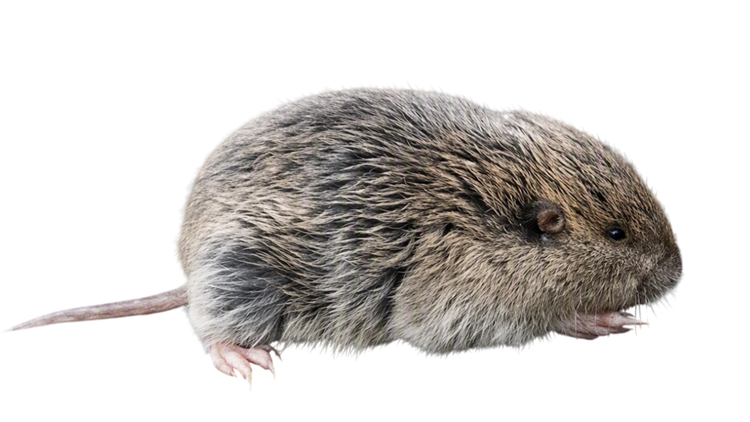
Northern pocket gopher
- Thick, compact body (15 to 25 cm)
- Very small eyes and ears, adapted for underground living
- Short, sparsely haired tail
- Large front claws used for digging
- Incisors extend outside the mouth
- Rarely seen above ground
Life span
Pocket gophers are solitary and occupy individual burrow systems. While individuals may live one to 3 years, populations persist through reproduction and gradual expansion.
Reproduction
Reproduction occurs once per year, typically in the spring. After a gestation period of approximately 30 to 40 days, females produce litters averaging 3 to 4 young.
The young remain in the nest chamber for several weeks before dispersing later in the season.
Behaviour
Pocket gophers are highly adapted for underground living and spend nearly all their time within burrow systems. Individuals are territorial and do not share tunnels except during breeding.
Burrow systems consist of shallow feeding tunnels and deeper chambers used for nesting, food storage and protection. They are active year-round and do not hibernate, with peak activity often occurring in spring and fall.
Nesting habits
Nest chambers are located deeper in the burrow system and are lined with vegetation for insulation and protection.
Separate chambers are often used for storing food, allowing gophers to remain underground for extended periods without needing to surface.
Feeding habits
Pocket gophers feed primarily on roots, tubers and other underground plant material. They commonly impact grasses, crops and ornamental plants by feeding below the surface.
In some cases, they pull above-ground vegetation into their tunnels. Damage is often first noticed as wilting, stunted growth, or plant death rather than direct feeding activity.
Damages
Pocket gophers can cause extensive damage in agricultural, residential and commercial environments.
In agricultural settings, feeding on root systems reduces crop yield and can damage forage, cereals and vegetable crops. Trees and shrubs may also be weakened or killed.
On properties, burrowing creates uneven ground and surface mounds that interfere with maintenance, reduce aesthetic quality and create hazards.
Tunnel systems can also affect soil stability and damage irrigation systems, underground utilities and other shallow infrastructure. Even low populations can displace significant amounts of soil.
Integrated Pest Management Model
Effective pocket gopher control requires a combination of monitoring, habitat management and targeted control methods. Complete elimination is uncommon and ongoing management is often required to prevent continued activity.
-
Monitoring/Assessment
Early detection is critical as pocket gophers are rarely seen above ground.
Look for:
- fresh soil mounds
- raised ridges from shallow tunnels
- soft or collapsing ground
- root or plant damage such as wilting or die-off
Fresh mounds indicate active tunneling.
-
Cultural
Managing site conditions can reduce favourable habitat and improve control effectiveness.
- Avoid excessive irrigation that softens soil and supports tunneling.
- Maintain well-managed vegetation.
- Inspect regularly for new mound formation.
These methods support long-term control but will not eliminate populations on their own.
-
Biological
Natural predators such as hawks, owls, coyotes and weasels may prey on pocket gophers and help reduce populations over time. However, these methods alone are not reliable for control and should be considered supplemental.
-
Mechanical
Trapping is one of the most effective methods for controlling pocket gophers, particularly for small or localized infestations.
- Locate main tunnels using a probe, typically 15 to 30 cm from fresh mounds.
- Place traps within the main runway, not in surface tunnels.
- Set 2 traps facing opposite directions.
- Cover openings after placement to block light and air.
- Check traps daily and reset as needed.
Pocket gophers travel within established tunnel systems, so proper placement is critical for success.
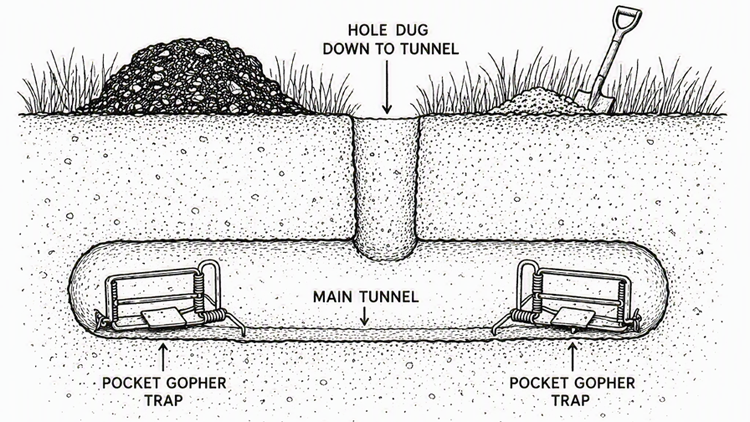 Figure 2. Trap placement within the main tunnel
 -
Chemical
Chemical control can be used when infestations are larger or when trapping alone is not sufficient.
For best results:
- Place bait only within active main tunnels.
- Monitor activity and reapply as needed.
- Always follow product label directions.
-
Evaluation
Ongoing monitoring is essential to ensure control measures are working effectively.
- Watch for new mound formation.
- Check trapping or baiting areas regularly.
- Adjust methods if activity continues.
Long-term success depends on consistent monitoring and early response to new activity.