Forest health and adaptation
A healthy forest is able to sustain itself ecologically and through it's lifecycle while providing for society's economic, social, recreational and spiritual needs and values. Natural and human-made forests must be managed to retain this resilience.
Alberta's vision
To lead Canada in science-based, proactive, adaptive and innovative management of forest health damaging agents in a forest environment with a multitude of values and challenges posed by a changing climate.
What we do
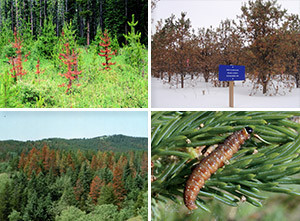
Forest health and adaptation monitors outbreaks of biological and environmental disorders that adversely affect the health of Alberta's forests. These include:
- insects and damaging agents
- fungi
- non-infectious disorders caused by climate and toxicity from natural and applied chemicals
- parasitic plants
Administration of forest health standards:
- management and conservation of forest genetic resources
- seed transfer through seed zones
Forest health and adaptation conducts applied forest genetics research to support:
- provincial tree breeding programs
- adaptation to climate change
- gene conservation
- recovery of threatened and endangered species
- creation of science-based provincial policies on utilization and deployment of forest tree genetic materials on public land
- regeneration of stands with appropriately genetically adapted seed and clones to counteract abiotic stresses
Alberta Tree Improvement and Seed Centre (ATISC)
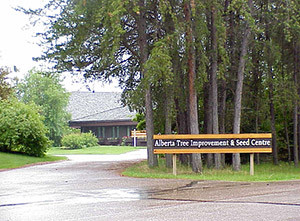
Forest health and adaptation operates the Alberta Tree improvement and Seed Centre (ATISC) located in Smoky Lake county, Alberta.
ATISC is the main station for the provincial forest genetics, tree improvement and reforestation seed programs. To learn more about the ATISC see, genetics and tree improvement research.
Contact
Connect with Alberta Forest Health and Adaptation:
Email: [email protected]
To talk to Alberta Forestry staff in your area: