
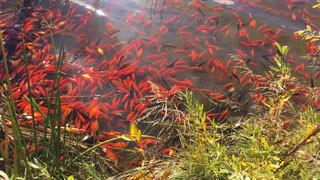
Goldfish may be a familiar sight in home aquariums, but when they are released into the wild, they can quickly become one of Alberta’s most disruptive aquatic invaders. Originally from eastern Asia, goldfish were imported into Canada by the pet trade industry. These seemingly harmless fish can turn destructive when introduced into Alberta’s waterbodies. Goldfish readily outcompete other fish for food, destroy aquatic plants and degrade water quality as their populations rapidly increase. Albertans play a crucial role in stopping this growing threat to our aquatic ecosystems.
Goldfish are one of a growing number of aquatic invasive species (AIS) found across Alberta that can have significant environmental impacts. Invasive species are non-native species (species that originated outside of Alberta) that cause, or have the potential to cause environmental, economic or societal harm. Nicole Kimmel, an Aquatic Invasive Species Specialist with Alberta Environment and Protected Areas, works to protect Alberta from these threats. Since the early 2010s, Nicole and the AIS team have found illegally released goldfish across Alberta, particularly in urban stormwater ponds. With a growing number of goldfish populations being discovered, the AIS team has worked diligently to develop response strategies, build partnerships and expand public education campaigns to reduce this growing threat to provincial waterbodies.
Competitive advantages of goldfish
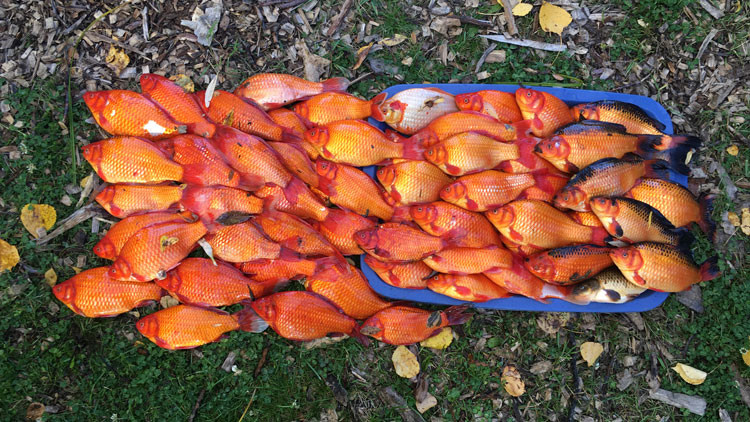
Goldfish have a unique ability to survive, and even thrive, under diverse and often harsh environmental conditions. “Goldfish can breed frequently with at least 3 spawning events per summer, laying thousands of eggs at a time,” shares Nicole. Current data estimates that approximately 40,000 new fish may be produced within 3 years of a single goldfish release, given that the species can even reproduce asexually.
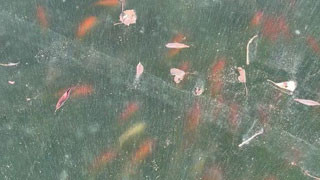
Goldfish have been found across the province, with higher densities typically observed in and around major cities where illegal releases are more common. They are highly adaptable to different environmental conditions. From swimming under ice covered waters near Fort McMurray to enduring hot summers in southern Alberta, water temperature does not seem to influence their ability to thrive.
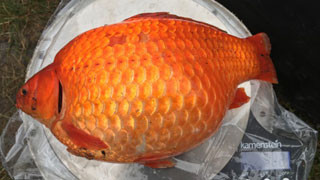
Goldfish are also opportunistic feeders who eat almost anything organic that will fit in their mouth, from small fish and insects to decaying plants. With abundant food and no tank-size limitations, they grow fast and compete with native species for habitat. In some Alberta waterbodies, individual goldfish have grown up to 40 cm, highlighting significant body growth potential in the wild.
Impacts on the environment
Beyond their competitive advantages, releasing goldfish can lead to other risks for the environment. The veracious feeding behaviour of goldfish disturbs sediment, which ends up in the water column and negatively impacts water quality and visibility. Increased sediment in the water decreases the amount of sunlight able to reach native aquatic vegetation, causing them to die off. Poor water conditions also decrease dissolved oxygen. In turn, this can harm native fish species while having little to no effect on goldfish.
The risks to the environment do not end with goldfish’s impacts on water quality. Goldfish often carry diseases and parasites that can be introduced into the environment, including from fish that have been inappropriately disposed of – whether dead or alive. These pathogens carried by goldfish can spread to native fish populations and put them at risk.
Partnerships are key to success
Effective solutions depend on close collaboration with municipalities to limit the introduction and spread of goldfish and other exotic fish species. With over 100 reported populations of goldfish across Alberta, these partnerships support coordinated management actions and strengthened education and public awareness initiatives.
The AIS team also works closely with researchers to improve detection of goldfish and other AIS in Alberta’s waterbodies. In collaboration with Dr. Patrick Hanington at the University of Alberta, the team uses environmental DNA (eDNA) to help identify the presence of goldfish across Alberta. As aquatic organisms move through their environment, they shed genetic material through spawning, feeding, excretion and when they die. Because this genetic material stays in the environment, it provides a simple and reliable method to detect many invasive species. By simply analyzing water samples, researchers can often determine where goldfish populations exist before they are reported or grow.
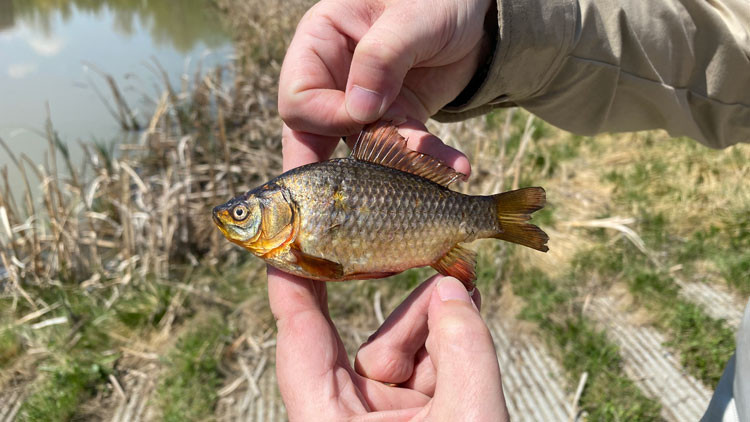
This approach also addresses a common challenge with goldfish identification. Over time, goldfish can lose their distinctive colouration in the wild, making visual identification more difficult. With eDNA, identification does not rely on appearance and provides higher confidence in confirming goldfish presence.
Alberta is a leader in response
Over the past decade, tens of thousands of goldfish have been removed from Alberta’s natural environment. This is an impressive response that far exceeds the level of management seen in most other Canadian jurisdictions. “Invasive goldfish are a problem across the world, and Alberta strives to be a leader on AIS response,” shares Nicole. Alberta coordinates multiple exotic fish removal projects each year, which reflects the province’s commitment to addressing the threat of invasive species.
The need for public involvement
Education is a central pillar to Alberta’s AIS program and is widely recognized as the most effective defence against the introduction and spread of invasive species.

One example of this work is the Don’t Let it Loose campaign, which encourages Albertans to avoid releasing pets and aquatic plants into the wild. While goldfish are a localized issue, other AIS can be transported by boats and other equipment and thus potentially spread AIS into new environments. For the AIS team, this means running the campaign across Alberta and joining education efforts throughout Canada and the United States.
Public cooperation is equally essential to the AIS program. Albertans can help protect the environment by never releasing their pets, water garden plants, bait, or live food products into provincial waterbodies. If you have unwanted live goldfish or other exotic fish species, return them to a pet store or donate them to a friend or local school.
Working together against AIS
Goldfish are one of many species that the AIS program works to keep out of our province. Other species of high concern in Alberta include Prussian carp, koi, flowering rush, pale-yellow iris and from neighbouring jurisdictions, invasive mussels. If you see a suspected AIS, call the AIS hotline at 1-855-336-BOAT (2628) or use the EDDMapS app. All reports are directed to the AIS team and provide critical information to inform response efforts.
Public awareness and involvement remain the most cost-effective approach to AIS management by helping stop releases before they happen. Many invasive species are unknowingly transported and released between waterbodies. To reduce the risk:
- Clean, drain, and dry your watercraft and gear as you move between waterbodies.
- Never move water, plants or animals between locations, even within Alberta.
You can help protect Alberta’s aquatic ecosystems by educating yourself, your friends and family about AIS and take preventative actions.
Additional resources
-

Dr. Jonathan Thompson
Dr. Jonathan Thompson was appointed as Environment and Protected Areas’ Chief Scientist on October 13, 2020.