Overview
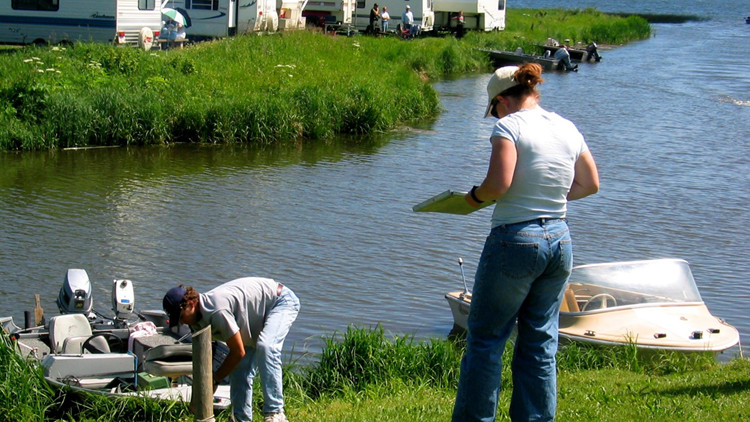
Angler surveys collect information directly from sport anglers and can be used to help answer questions related to fisheries management. Angler survey questions typically include:
- date
- time of day
- number of hours fished
- fish species caught
- whether fish caught were harvested or released
Biological data such as length, weight, age, gender, and maturity may be collected if permitted by harvesting regulations and the angler.
Angler surveys also provide opportunities to collect demographic information from anglers and can provide valuable feedback on common perceptions to fisheries management topics. Due to the amount of man hours required to complete these surveys, angler surveys can be costly.
Standardized methods of collecting information include:
- interviewing anglers at the end of or during their trip
- progressive counts of anglers from a boat or from the shore
- trail cameras that take pictures of boats
These standardized methods ensure surveys are comparable.
Types of angler surveys
Creel survey
Standard information collected in creel surveys includes:
- number of hours fished (angling effort)
- number of fish caught (including fish that were released)
Biological information, such as length, weight, gender, maturity and aging structures may also be collected from harvested fish.
Angling effort survey
During an angling effort survey, information is collected on:
- number of anglers
- number of angling-hours spent on a waterbody
These surveys are usually done remotely. Counts of anglers (or boats) are done from a boat or from vantage points on shore. Other methods for collecting effort information include using programmable trail cameras, boat counts or aircraft counts.
Human dimension survey
Human dimension surveys collect data on the role and attitudes people have towards natural resource management. During human dimension surveys, anglers are interviewed in person or invited to complete an online survey.
For example, information is collected on:
- what motivates anglers to fish
- how satisfied anglers were with their fishing experience
- what concerns anglers about the fish population or fishery
How survey data is used
All angler surveys start with designing a series of questions that when answered will help to guide the management of a fishery. After data collection, analysis follows peer reviewed methodologies, and the results help fisheries biologists determine the best management practices to ensure sustainability of fish populations.
Angling effort
Information from creel and angler effort surveys helps fisheries managers understand the status of a sport fishery or how the sportfishing regulations are sustaining the fish population.
A critical parameter is angling effort or the number of angling hours during the sportfishing season. Angling effort is usually converted to angling pressure of hours per hectare (that is: #h/ha); this helps compare populations between waterbodies and monitor effort changes within waterbodies over time.
Human dimension surveys
Human dimension surveys primarily collect information from users about satisfaction with their experience with the resource (for example: sport fishing) motivations, and to understand their viewpoints and attitudes about the resource. This information is anonymous and critical in understanding the sociology of natural resources use.