Recent warm and dry conditions have increased the fire danger to high across the Slave Lake Forest Area. New wildfires may spread quickly in these conditions. Use extra caution during outdoor activities that can cause a spark.
Wildfire situation
There are no active wildfires in the Slave Lake Forest Area.
Since January 1, 2026, the Slave Lake Forest Area has responded to 58 wildfires, which have burned approximately 38 hectares.
See the Alberta Wildfire Status Dashboard for up-to-date information on wildfire locations, status, size, and statistics. By adjusting settings and layers on the dashboard, you can also view forest area boundaries, active fire advisories, restrictions and bans, wildfire danger ratings and much more.
Be wildfire prepared
- Get informed – Know your local information sources and have alternative ways to stay informed whether you live remotely, are travelling or are spending time in the backcountry.
- Check fire danger ratings for your area and learn about your community’s wildfire history to help you assess current conditions and make informed decisions.
- Download the Alberta Wildfire app for mobile devices.
- See Alberta Wildfire for the status and location of wildfires, fire bans and restrictions, and learn more about wildfire prevention.
- Download the WeatherCan app for advisories in your chosen location(s) and visit the Air Quality Health Index (AQHI) map to track air quality in your community
- Visit FireSmoke Canada for information about wildland fire weather and smoke. Monitor smoke forecasts to plan for poor air quality, even when fires are far away.
- Maintain an emergency kit with essential supplies and wildfire-specific items including personal protective equipment like respirators (for example: N95, KN95 or P100) or high-quality medical masks (for example: an ASTM-certified mask). Keep your kit in a safe, easy-to-access location, even in the dark.
- If you have a vehicle, keep the tank full in case fuel stations lose power or are closed. Keep a vehicle emergency kit and include an extra phone charger with necessary adapters.
- Create an emergency plan that helps prepare your loved ones for wildfire by ensuring everyone knows where to go and how to respond, even if separated when it occurs.
- Learn about reception centres to understand what they offer and what to expect if you are directed to one during an evacuation. Learn more about reception centres on the evacuation webpage.
For more information visit the Alberta Wildfire preparedness site.
Safe campfires
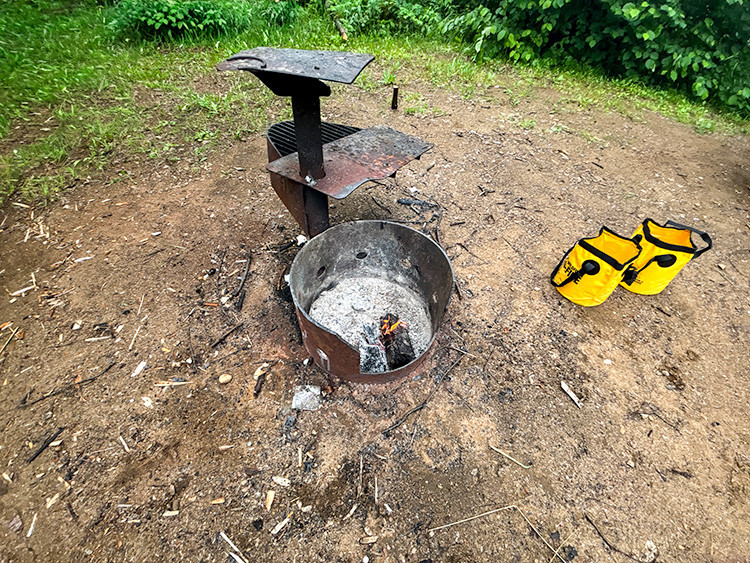
In 2025, 122 wildfires in Alberta were started by unsafe campfires. Ensure your campfire doesn't become a wildfire by implementing these strategies:
- In campgrounds or recreational areas, use the designated stoves, fire rings or fire pits. These are designed to keep fires from spreading and are the best choice for a safe campfire.
- When outside of a campground, use sites that are clear of:
- dry grass
- bushes
- leaves
- branches
- tree trunks
- peat moss
- overhanging branches
- If a site has already been used for a campfire, use the same site.
- Build your campfire on level ground that is sheltered from wind.
- Keep your campfire to an appropriate size. Larger fires are harder to control.
- If you cannot build your fire near a water source, have a large container of water nearby to keep your campfire under control.
- Never leave your campfire unattended.
- Never assume rain or snow will put your campfire out.
- When extinguishing your campfire, soak it, stir it, and soak it again until the coals are completely cool to the touch.
For more information, see Safe campfires: Wildfire prevention tips.
Contact info
Jody Lucius
780-805-0312
[email protected]
Published on July 23, 2026 10:24 am