Building together
On November 27, 2025, the governments of Canada and Alberta signed a landmark energy agreement aimed at boosting oil exports to Asian markets, removing investment uncertainty and advancing emissions reduction efforts. This partnership is designed to position Canada as a global energy superpower and strengthen the economy by increasing energy production and exports.
-

Oil pipeline
This agreement lays out the path forward for an Indigenous co-owned pipeline to Asian markets, with both governments supporting its approval and construction.
-
Emissions cap cancelled
The federal government has committed to not implementing the oil and gas emissions cap, allowing for a massive increase in oil production and private sector jobs.
-

Electricity regulations suspended
Federal Clean Electricity Regulations are suspended in Alberta, enabling increased electricity generation and investment in AI computing infrastructure for national and allied use.
-

Competition Act amendments
The federal government will amend legislation to allow energy companies to advertise their environmental leadership and efforts without fear of penalty.
-
Tanker ban adjustments
This agreement allows for needed adjustments to the tanker ban when the new pipeline to Asia is approved by the Major Projects Office.
-
Carbon capture initiative
Contingent on the construction and operation of the new pipeline to Asian markets, Canada and Alberta will support the world’s largest CCUS project to lower emissions from Alberta’s oil, while also streamlining regulations to support innovation.
Oil pipeline
Central to the agreement is the development of an Indigenous co-owned Alberta oil pipeline to Asian markets, recognized as a project of national interest.
This new pipeline will transport over one million barrels of oil per day through a strategic deep-water port. This initiative is in addition to any expansion of the Trans Mountain pipeline and will help diversify export markets, reduce reliance on a single customer and ensure substantial economic benefits for Indigenous partners and British Columbia communities.
We are committed to working with our federal counterparts to facilitate the application, approval and construction of this privately financed pipeline. We're also making regulatory changes to allow Canadian energy companies to promote their environmental leadership globally.

Pathways and emissions reduction
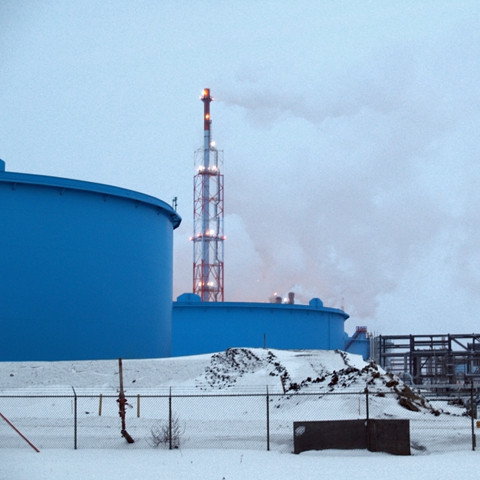
Contingent on the construction and operation of a new pipeline to Asian markets, Alberta's government is partnering with the federal government, working with the Pathways companies and providing incentives to advance the world’s largest carbon capture, utilization and storage (CCUS) project. This will make Alberta oil the lowest-emission heavy oil globally.
This initiative will displace higher-emitting oil from other countries and improve both environmental and geopolitical outcomes.
The agreement demonstrates a shared commitment to expanding oil and gas production while investing in CCUS, nuclear and other clean technologies to reduce the environmental impact of energy development.
Oil and gas emissions cap
To encourage growth in Alberta’s energy sector, the federal government will not implement an oil and gas emissions cap, enabling significant increases in oil production and private sector jobs.
The goal is to produce 6 million barrels of oil per day by 2030 with an increase to 8 million barrels per day by 2035. We are working with the federal government to design competitive, long-term carbon pricing and sector-specific standards for large emitters. This work includes concluding a methane equivalency agreement by April 2026 with the goal of reducing methane emissions by 75% by 2035 compared to 2014 levels.
Clean Electricity Regulation
The agreement includes the immediate suspension of federal Clean Electricity Regulations in Alberta. This change will enable new investment in power generation in Alberta and create the conditions for major investments in AI data centres.
We are working with the federal government and industry partners to develop a new carbon pricing framework for the electricity sector, administered through our existing TIER program. This approach is expected to support affordability, reliability and competitiveness while fostering innovation and support the growth of sovereign computing capacity for Canada and its allies.
A new path forward
This landmark agreement sets a new direction for energy development, environmental stewardship and economic prosperity in Canada and Alberta.
By prioritizing Indigenous partnership, regulatory clarity and technological innovation, both governments are working together to build a more sustainable, independent and globally competitive energy sector. The accord is expected to create hundreds of thousands of jobs, diversify export markets and position Canada as a leader in low-emission energy production.
Updates
- Major milestone for oilsands production and Pathways (July 13, 2026)
- West coast pipeline, private partner, oilsands production and pathways (July 2, 2026)
- Advancing an oil pipeline to the west coast (May 15, 2026)
- Final agreement signed for major project reviews (April 2, 2026)
- A made-in-Alberta approach to methane reduction (March 25, 2026)
- Alberta to streamline major project approvals (March 23, 2026)
- Faster approvals. Faster projects (March 6, 2026)
- Alberta and Ottawa ink landmark energy agreement (November 27, 2025)