Invasive mussels destroy ecosystems, threaten shorelines and can cause hundreds of millions in damage that can affect Alberta’s economy. By defending water bodies, ecosystems and infrastructure, Alberta’s government is protecting jobs, businesses, agriculture, wildlife and recreation opportunities across the province.
Preparations are underway for the upcoming 2026 boating season. From May 1 until Sept. 30, mandatory inspections will again be in effect for anyone entering Alberta with watercraft through the eastern and southern provincial borders.
“Alberta is leading the way on aquatic invasive species prevention in Canada. With boating season now underway, it is time to act. Protecting Alberta’s waters is critical to our environment, our economy and our way of life. We are taking strong, proactive steps to stop invasive species before they enter the province and cause irreversible damage.”
All motorized and non-motorized watercraft must get inspected at one of Alberta’s inspection stations when crossing from the eastern or southern borders. If the closest inspection station is closed, Albertans and visitors must get their watercraft inspected within seven days and before launching into Alberta’s waters.
“We’re pleased to see continued investment in aquatic invasive species prevention across Alberta. Strong inspection programs and public awareness are essential, and it’s critical that all water users understand their role in preventing the introduction and spread of invasive mussels.”
“Alberta’s 11 irrigation districts recognize the serious economic and ecological threats aquatic invasive species pose to Alberta and are especially concerned about the potential for invasive mussels to spread to our province. We applaud the provincial government’s increasing efforts to prevent the spread of aquatic invasive species.”
Alberta’s government continues to step up in the fight against invasive mussels and other invasive species. A record 12 inspection stations are being opened this year, the most ever operated by the program.
To support efforts to prevent invasive species from entering Alberta’s waterways, investments are being made to develop hot wash technology for aquatic invasive species prevention to assist roadside inspection at stations and if ever needed, for emergency response at shorelines.
Through Budget 2026, an investment of $5 million over two years is being made for a permanent roadside watercraft inspection station near Cold Lake. The new inspection station will improve compliance in the Cold Lake region by preventing opportunities for boaters to illegally bypass inspections. It will provide easier, more convenient access and the location’s proximity to the Alberta-Saskatchewan border will improve inspection compliance.
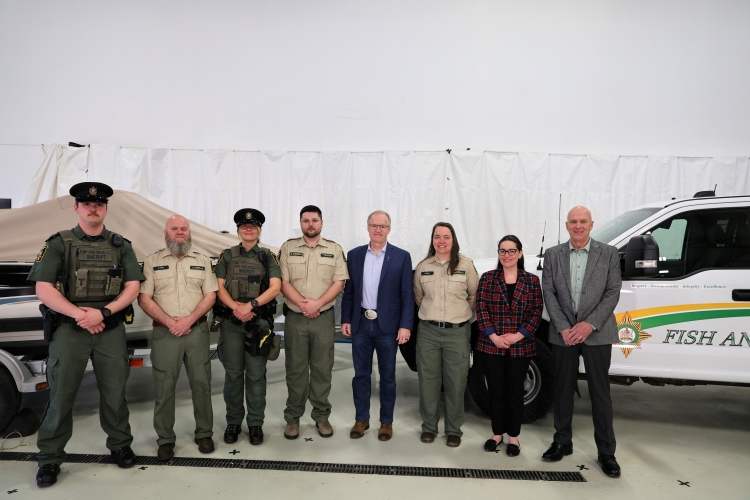
Left to right: Sgt. Xander Kipling, Bill Fisher, Tova Jacobsen, Michael Surgenor, Minister Grant Hunter, Nicole Kimmel, Megan Evans, Richard Phillips. (Credit: Alberta government)
Conservation K-9s and watercraft inspections work together to detect invasive mussels at strategic entry points across Alberta. That’s why the K-9 unit is expanding from one to three teams to support detection of invasive mussels in about half the time it takes human inspectors. These specially trained canines can identify mussel odours from microscopic mussel larvae in difficult-to-see areas of boats. Right now, Alberta’s two new Conservation K-9 teams are undergoing assessment and completing an extensive training camp in the United States.
New environmental DNA (eDNA) testing for early detection of invasive mussels and other species is being conducted on Alberta waterbodies to expand monitoring and early detection capabilities.
Quick facts:
- Alberta’s fines are the highest in North America:
- $4,200 for failing to stop at an open inspection station.
- $600 for failing to remove a drain plug when transporting a watercraft within Alberta.
- In 2025, 21,995 boats were inspected, over 8,495 more than during 2024.
- Thirteen watercraft carrying invasive mussels attempted to enter Alberta.
- Contaminated watercraft all entered from the eastern provinces in Canada or the United States.
- A new inspection station will be located at the Chief Mountain border crossing in Waterton National Park in collaboration with Parks Canada and Canada Border Services
Related information
- Alberta Aquatic Invasive Species Task Force
- Aquatic Invasive Species
- Watercraft Inspections
- Clean Drain Dry