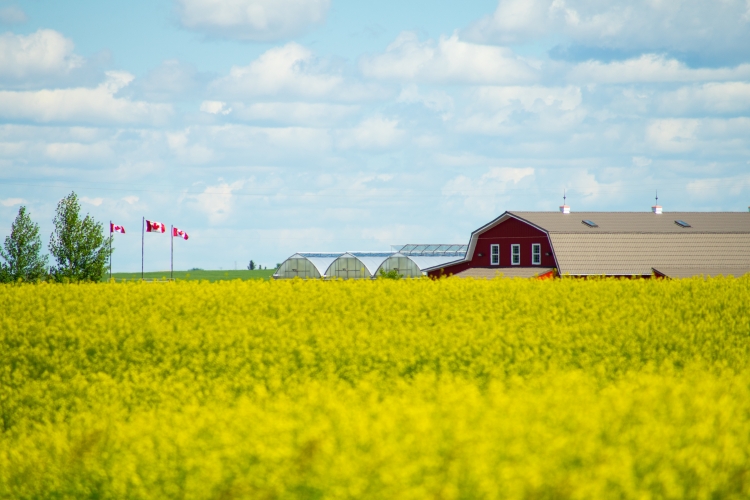
Restoring Alberta farmers’ ability to manage water on their land, like the one pictured here.
This fall, Alberta’s government will remove Water Act approval requirements for routine agricultural activities involving ephemeral water bodies and temporary and seasonal wetlands on private cropland.
“Farmers should not have to spend thousands of dollars and wait on government approval to carry out routine work on their own land. We are restoring private property rights and getting government out of the way where it doesn’t need to be. These common-sense changes will save farmers time and money and give them greater control over how they manage their own property.”
The changes respond directly to concerns raised by Alberta farmers and agricultural organizations about unnecessary regulatory burden.
Under the current system, routine farming activities can trigger regulatory requirements if they affect a temporary or seasonal wetland. In some cases, a farmer may have to hire a qualified wetland professional, complete an assessment, wait for government review and pay wetland replacement costs before proceeding.
“Farmers have faced unnecessary administrative burden for routine low-risk activities on their own land for too long. These common-sense changes will give producers more flexibility to manage water and improve field conditions while providing practical tools to improve productivity and manage water on their operations.”
The changes will make it easier for farmers to cultivate, seed, spray, ditch, drain and infill on their own cropland without going through an unnecessary approval process.
“This change allows early treatment of excess temporary water on the landscape which will help pulse farmers reduce the risks associated with waterlogged soils. Pulse crops such as peas and lentils are highly vulnerable to excess moisture. It will give pulse farmers more flexibility to make effective water management decisions and provide the best opportunity for healthy, productive crops while still supporting core wetland habitat.”
Under the new approach, those approval and replacement requirements will be removed for specified farming activities on private cropland. Water associated with these exemptions will continue to be managed on the farmer’s property, helping ensure neighbouring landowners and downstream infrastructure are protected.
“Temporary standing water causes production inefficiencies and by managing these short-lived wet areas and reducing their impacts earlier in the season, it allows farmers to have greater efficiency in the field.”
Instead of requiring a lengthy Water Act approval, Alberta will develop a clear code of practice for tile drainage on private cropland.
Alberta’s government is also reducing red tape for farmers who use tile drainage to manage excess subsurface water and improve growing conditions.
“Farmers care about wetlands, the environment and the wildlife that lives on the landscape. Water, in wet years like this year, can have a detrimental and long-term impact through flooding and erosion. These management changes will allow farmers to protect our soils while continuing to provide habitat for birds, mammals and other species.”
The code will establish straightforward, enforceable standards while allowing farmers to proceed through notification rather than a full regulatory approval. Where water could affect downstream landowners, their consent will be required.
“Respect for property rights means trusting landowners to responsibly manage their land, and Alberta farmers have demonstrated that responsibility for generations. These changes recognize that routine farming decisions are best made by the people who know the land best.”
Together, these reforms mean fewer unnecessary approvals, lower costs and less time waiting on government.
Alberta will continue removing regulatory barriers that do not provide a meaningful benefit while maintaining appropriate protections for neighbouring landowners, infrastructure and higher-value wetlands.
Quick facts
- The new exemptions will apply to specified agricultural activities on private cropland, including cultivating, direct seeding, spraying, surface water draining or ditching, and infilling involving ephemeral water bodies and temporary and seasonal wetlands.
- Water managed under the agricultural wetland exemptions must remain on site and must not adversely affect neighbouring properties or infrastructure.
- Amendments to the Water (Ministerial) Regulation and Alberta Wetland Policy are expected to take effect this fall.
- A new tile drainage code of practice is expected to be completed in early 2027 following targeted stakeholder engagement.
- Tile drainage projects will require the consent of potentially affected downstream landowners.
Related news
- New rules boost water storage and conservation (Jan. 20, 2026)