Alberta’s government will not allow solar panels to pile up in landfills across the province. Beginning Oct. 1, Alberta will become the first province in Canada to operate a solar panel recycling program and is banning solar panels from landfill disposal. This will ensure they are directed toward reuse and recycling when they reach the end of their useful lives.
Alberta has the second-largest installed solar capacity in Canada, and that capacity continues to grow. By 2045, more than 95 per cent of the solar panels currently installed in Alberta are expected to reach the end of their lives, generating as much as 72,700 tonnes of material.
“Alberta has never been afraid to lead. We will not wait until mountains of dead solar panels are piling up in our landfills before acting. We are putting the system in place now to recover valuable materials, attract private investment and build a new recycling industry here in Alberta.”
Solar panels contain valuable glass, aluminum, silicon, silver, copper and other metals. Instead of burying those resources, Alberta’s new system will recover them for use in new products, attract investment in collection and processing capacity, and help establish a new recycling industry here at home.
“Responsible solar energy growth means considering environmental responsibility throughout its lifecycle. By planning ahead to ensure expired panels are properly collected and materials are reused where possible, we’re protecting taxpayers from future cleanup costs and keeping power affordable and sustainable for generations to come.”
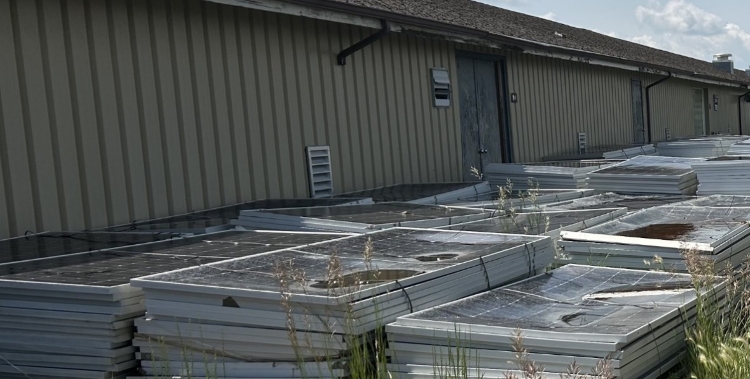
Stacks of expired solar panels in Brooks. (photo credit: Sunset Renewable Asset Management Inc.)
An environmental fee of $14 will apply to each new solar panel supplied in Alberta beginning Oct. 1. For a typical residential installation of 20 panels, the proposed fee would total $240, less than 1.5 per cent of the overall installation cost. This ensures Albertans buying these products – not taxpayers decades from now – fund responsible recycling.
“As Alberta’s renewable energy sector grows, recycling solar panels is the logical next step in building a stronger circular economy: maximizing resource use, reducing waste, and delivering long-term value for Albertans. We look forward to working with government and industry to support the successful implementation of this important initiative.”
The fee will ensure money is available to collect, transport and recycle panels when they reach the end of their lives, rather than leaving municipalities and taxpayers to pay the bill decades from now. It will only apply to new panels supplied after the program begins, with no retroactive fees on panels already installed.
“Sunset is pleased to see the Government of Alberta putting legislation and programming in place to support a circular economy for solar panels. These steps will save materials from ending up in our landfills and keep them in the Alberta and Canadian economies. The commitment to end-of-life management further enhances the sustainability of our industry and we are pleased to support this initiative.”
The goal is not simply to manage waste. It is to turn tomorrow’s waste into feedstock for new products, new investment and new Alberta jobs.
Quick facts
- The fee will apply only to new panels supplied on or after Oct. 1. There will be no retroactive fee on panels already installed.
- The fee is intended to fund the collection, transportation and recycling of legacy and newly supplied panels.
- Most solar panels have an expected lifespan of about 25 years.
- Alberta and the Alberta Recycling Management Authority will work with industry to build reuse and recycling capacity in Alberta as volumes increase.
- Alberta expanded the electronics recycling regulation in 2024 to include solar panels, wind turbine components and electric vehicle batteries.
Related news
- Creating Canada’s best recycling program (Aug. 13, 2024)